
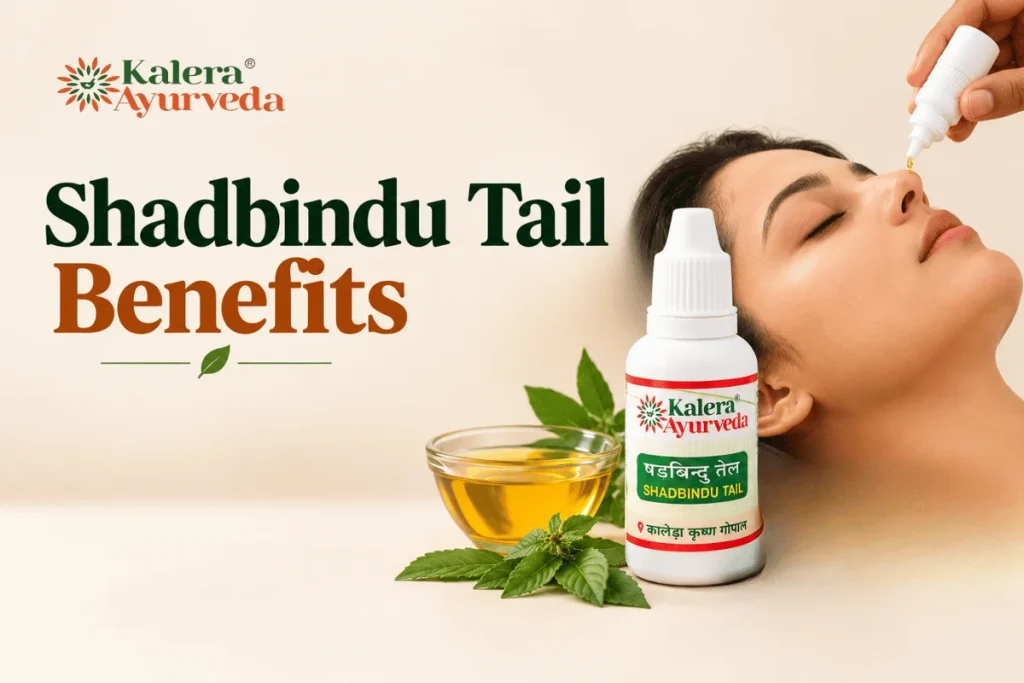
Shadbindu Tail Benefits are traditionally associated with nasal care, sinus comfort, easier breathing and general head and scalp wellness. Shadbindu Tail is a traditional Ayurvedic oil made with sesame oil and selected herbs such as Bhringraj, Amla, Haritaki and Pippali.
Kalera Ayurveda describes its Shadbindu Tail as an Ayurvedic nose oil intended to support sinus health, nasal comfort and easy breathing. The product is available in a 25 ml pack.
Rather than looking at this oil as a quick solution for a particular condition, it is better to understand its traditional uses, ingredients, application method and precautions.
What Is Shadbindu Tail?
Shadbindu Tail is a traditional Ayurvedic oil prepared for nasal and head-related wellness. The formulation is traditionally associated with care of the nose, head and scalp.
Kalera Ayurveda’s current product description highlights its use for nasal congestion, sinus-related discomfort, easy breathing and general nasal care.
The oil is based on sesame oil and contains several herbs traditionally used in Ayurveda. Because different manufacturers can use different formulations, the ingredients of the specific product should always be checked before use.
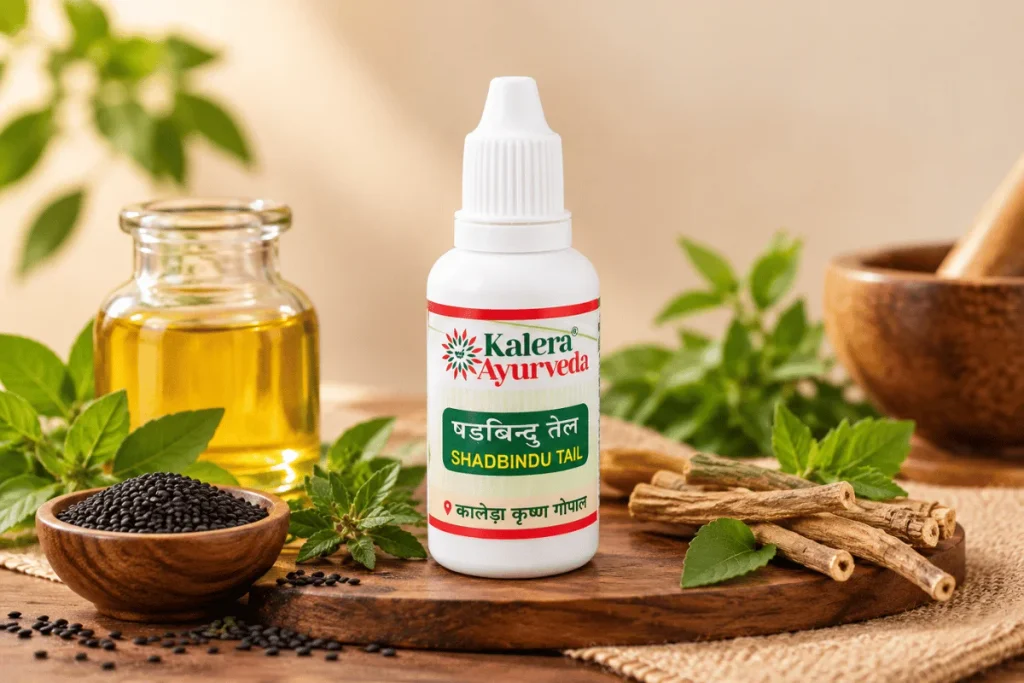
For Kalera Ayurveda Shadbindu Tail, the listed ingredients include:
- Sesame Oil
- Bhringraj
- Amla
- Haritaki
- Pippali
You can explore the Kalera Ayurveda Shadbindu Tail product page for the current product information.
Shadbindu Tail Benefits and Traditional Uses
Shadbindu Tail has traditionally been used as part of Ayurvedic head and nasal care. Its uses can be understood through the ingredients and the traditional role of medicated oils.
1. Supports Nasal Comfort
One of the main traditional uses of Shadbindu Tail is nasal care. Kalera Ayurveda describes the product as supporting nasal comfort and helping with blocked-nose concerns.
This makes it relevant for people who experience occasional nasal discomfort, especially during seasonal changes. However, persistent or severe nasal symptoms should be assessed by a healthcare professional.
2. Helps Maintain Clear Nasal Passages
The herbs used in the formulation are traditionally associated with respiratory and nasal wellness. Pippali, for example, is widely used in Ayurvedic formulations related to respiratory care.
The product is intended to support comfortable breathing rather than being presented as a replacement for medical treatment.
3. Supports Sinus Wellness
Another commonly discussed use of Shadbindu Tail is traditional sinus care. Kalera Ayurveda describes the oil as supporting sinus health and helping with nasal blockage.
It is important to distinguish traditional wellness use from a claim that the oil can cure sinusitis or another diagnosed medical condition.
4. Supports a Traditional Head-Care Routine
Shadbindu Tail is also traditionally associated with head-related Ayurvedic care. A published standardization study describes classical Shadbindu Taila as a formulation traditionally used for conditions involving the head, along with traditional references to eyesight and hair-related concerns.
These traditional uses should not be interpreted as proof that the oil can treat every condition mentioned in classical descriptions.
5. May Support Hair and Scalp Wellness
Hair and scalp care is another traditional association of Shadbindu Tail. The classical formulation studied in published research was traditionally described in connection with hair loss.
However, the classical formulation examined in that research is not necessarily identical to every commercially available Shadbindu Tail. For this reason, it is better to view hair-related use as a traditional application rather than a guaranteed result.
6. Provides a Simple Ayurvedic Nasal-Care Option
For people interested in traditional Ayurvedic self-care, an oil-based formulation can be part of a simple nasal-care routine when used appropriately.
The current Kalera product description specifically positions Shadbindu Tail for nasal care, sinus comfort and easier breathing.
Ingredients in Kalera Shadbindu Tail
The ingredients are an important part of understanding how this Ayurvedic oil is positioned.
Sesame Oil
Sesame oil is commonly used as a base oil in Ayurvedic preparations. It provides the oily medium through which the herbal ingredients are incorporated into the formulation.
Bhringraj
Bhringraj, also known as Eclipta alba, is a well-known Ayurvedic herb traditionally associated with hair, scalp and head care.
Amla
Amla, or Indian gooseberry, is traditionally valued in Ayurveda for its nutritional and antioxidant properties and is widely used in wellness formulations.
Haritaki
Haritaki is a classical Ayurvedic ingredient used in many traditional formulations. It is commonly associated with digestive and overall wellness support.
Pippali
Pippali, or long pepper, is traditionally used in Ayurvedic preparations related to respiratory and digestive wellness.
Important: These traditional associations should not be treated as proof that an individual ingredient or the finished oil can cure a medical condition.
How to Use Shadbindu Tail
Kalera Ayurveda’s current product instructions recommend using the oil with the head slightly tilted back and placing 2–3 drops in each nostril. The product page also advises morning use or use as directed by a healthcare practitioner.
A simple application approach is:
- Sit comfortably and keep the head slightly tilted back.
- Use the recommended amount of Shadbindu Tail.
- Apply the product according to the directions on the product packaging.
- Avoid using more oil than recommended.
- If you have a medical condition or are unsure about nasal oil application, consult a qualified healthcare professional before use.
Do not use the product as a substitute for treatment prescribed for a diagnosed sinus, respiratory or other medical condition.

When Should Shadbindu Tail Be Used With Caution?
Ayurvedic oils may be useful for traditional wellness routines, but nasal application is not appropriate for everyone in every situation.
Take professional advice before using Shadbindu Tail if you:
- Have a persistent or severe nasal problem.
- Have an active nasal injury, bleeding or significant irritation.
- Experience an unusual reaction after application.
- Are already using medicines or treatments for a nasal or respiratory condition.
- Are unsure whether nasal oil application is suitable for you.
Stop using the product and seek medical advice if you develop significant irritation, breathing difficulty or another concerning reaction.
The published standardization study found no analyzed heavy metals and no skin irritation in its animal skin-irritation testing, but the researchers also stated that further preclinical and clinical studies were needed to establish therapeutic utility.
Shadbindu Tail vs Other Ayurvedic Oils
Not every Ayurvedic oil serves the same purpose. The right choice depends on the intended use and the formulation.
For example, Kalera Bhringraj Oil is positioned more specifically around hair and scalp care, while Shadbindu Tail is positioned around nasal and head care.
Similarly, Kalera Anu Tail is another Ayurvedic oil associated with traditional nasal care. Comparing the ingredient list, product directions and intended use is more useful than assuming that all Ayurvedic oils work in the same way.
You can also explore the Ayurvedic Oils collection from Kalera Ayurveda to understand the different formulations available.
What Does Research Say About Shadbindu Tail?
Research on Shadbindu Taila has included quality-control and standardization work. A 2013 study published in AYU examined a classical Shadbindu Taila formulation using physicochemical, phytochemical and chromatographic methods. The study also evaluated heavy metals and skin irritation in animals.
The study reported that the analyzed heavy metals were below detection limits and that the formulation did not show skin irritation in the animal test. However, the researchers clearly noted that more preclinical and clinical research would be required to establish its therapeutic effectiveness.
For readers who want to examine the research directly, see the published Shadbindu Taila standardization study on PubMed Central.
This distinction is important: evidence about a classical formulation or laboratory testing does not automatically prove that every commercial Shadbindu Tail product will produce the same effects.

FAQs : About Shadbindu Tail
1. What is Shadbindu Tail mainly used for?
Shadbindu Tail is traditionally used for nasal and head-related Ayurvedic care. Kalera Ayurveda specifically describes its product for nasal care, sinus comfort, blocked-nose concerns and easier breathing. It should be considered a wellness product rather than a guaranteed treatment for a diagnosed condition.
2. Can Shadbindu Tail help with a blocked nose?
Kalera Ayurveda describes Shadbindu Tail as helping with blocked-nose concerns and supporting easier breathing. However, nasal blockage can have many causes, including allergies, infection or structural problems. Persistent blockage should be evaluated by a healthcare professional rather than managed only with an oil.
3. How many drops of Shadbindu Tail should be used?
The current Kalera Ayurveda product instructions recommend 2–3 drops in each nostril and mention morning use or use as directed by a healthcare practitioner. Always follow the current product label and avoid increasing the amount on your own.
4. What are the ingredients in Kalera Shadbindu Tail?
Kalera Ayurveda currently lists sesame oil, Bhringraj, Amla, Haritaki and Pippali as the main ingredients. These ingredients are traditionally used in Ayurveda for different aspects of wellness, including head, hair, respiratory and general care.
5. Can Shadbindu Tail be used for hair care?
Hair-related use is part of the traditional description of classical Shadbindu Taila. Published research also notes this traditional association. However, the formulation studied in that research may differ from a particular commercial product, so Shadbindu Tail should not be presented as a guaranteed treatment for hair loss.
6. Is Shadbindu Tail suitable for everyone?
Not necessarily. People with persistent nasal symptoms, nasal injury, significant irritation or an existing medical condition should seek professional advice before using nasal oil. If any unusual or significant reaction occurs after use, discontinue it and seek appropriate medical guidance.
Final Takeaway
Shadbindu Tail is a traditional Ayurvedic oil associated with nasal, sinus and head care. Shadbindu Tail benefits are traditionally linked with nasal comfort, easier breathing, sinus wellness and head and scalp care.
Kalera Ayurveda’s formulation contains sesame oil, Bhringraj, Amla, Haritaki and Pippali and is currently positioned for nasal and sinus wellness.
The most important point is to use the oil according to the product instructions and keep traditional Ayurvedic uses separate from claims of proven medical treatment. When symptoms are persistent, severe or unusual, professional medical advice should come first.