
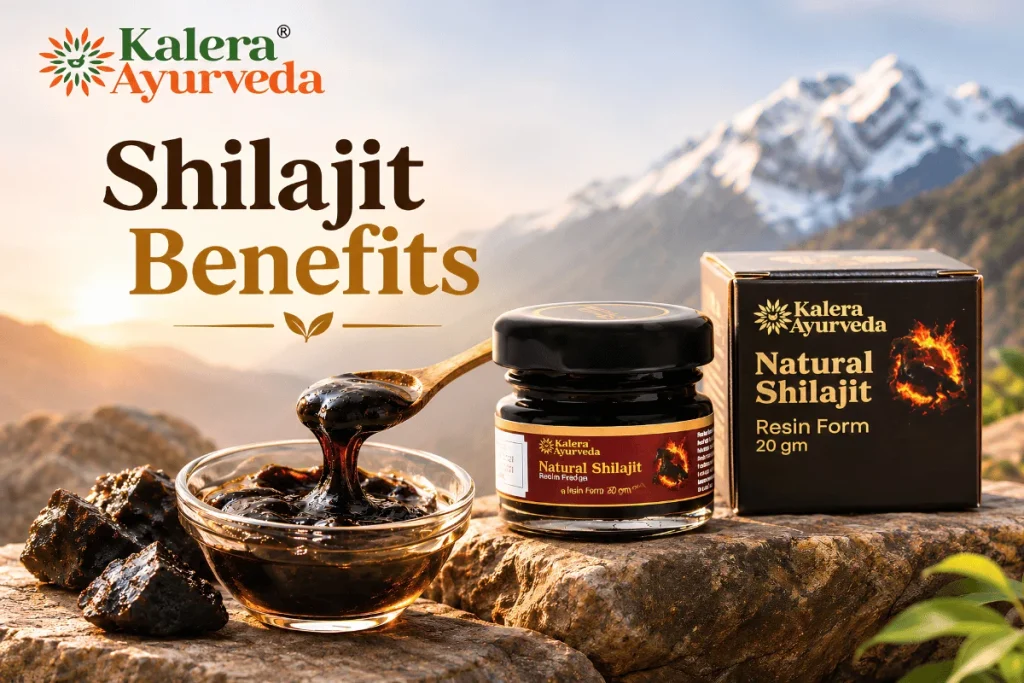
Shilajit is a naturally occurring, dark mineral-rich substance traditionally used in Ayurveda for strength, stamina and general wellness. Found in mountainous regions, particularly the Himalayas, it is formed over long periods through the decomposition of plant material and other organic substances.
Today, Shilajit is available in different forms, including resin, powder and capsules. It has gained attention for its fulvic acid content and potential role in energy, men’s health, brain function and overall vitality.
But how much of what we hear about Shilajit is supported by research? What are its traditional uses, and what precautions should you take before using it?
In this guide, we explore Shilajit benefits, its key components, traditional uses, how to take Shilajit resin and important safety information.
What Is Shilajit?
Shilajit is a sticky, dark brown or black substance that naturally develops in cracks and crevices of mountainous rocks. It is commonly associated with the Himalayan region and has been used in traditional Ayurvedic practices for centuries.
In Ayurveda, Shilajit is described as a Rasayana, a category of substances traditionally associated with rejuvenation, strength and general well-being.
Shilajit is not a single herb. It is a complex natural material containing humic substances, fulvic acid and various organic compounds and minerals. Its exact composition can vary depending on its geographical source, environmental conditions and purification process.
Kalera Ayurveda offers Pure Shilajit Resin as part of its Ayurvedic product range. The product is presented as a traditional wellness supplement for adults interested in supporting their daily vitality.
Shilajit Benefits: 7 Traditional Uses and Potential Benefits
Shilajit is widely discussed for its possible role in different areas of wellness. Some benefits are based on traditional Ayurvedic use, while others have been explored in preliminary scientific research.
Here are seven important areas worth understanding.
1. May Support Energy and Physical Stamina
Energy and stamina are among the most common reasons people explore Shilajit. In traditional Ayurvedic practice, it has been used as a rejuvenating substance associated with physical strength and vitality.
Researchers have also investigated compounds in Shilajit, particularly fulvic acid, for their possible effects on cellular processes and energy metabolism.
However, current evidence is not strong enough to confirm that Shilajit reliably increases energy or treats fatigue in everyone. Feeling tired regularly can have many causes, including poor sleep, nutritional deficiencies and underlying health conditions.
2. Traditionally Associated with Men’s Health
Shilajit has a long history of traditional use in men’s wellness and reproductive health.
Some small human studies have investigated purified Shilajit and its possible effects on testosterone levels and reproductive parameters. These early findings have attracted attention, but larger and better-designed studies are needed.
Shilajit should not be considered a proven treatment for low testosterone, infertility or sexual health conditions. Men experiencing these concerns should seek medical assessment rather than relying only on supplements.
3. May Support Mental Focus and Brain Health
Shilajit contains fulvic acid, a compound that has been studied for its antioxidant and other biological properties.
A research paper published in the International Journal of Alzheimer’s Disease explored the potential cognitive effects of Shilajit and discussed laboratory findings related to tau protein aggregation. These findings are scientifically interesting, but they do not prove that taking Shilajit prevents Alzheimer’s disease or improves memory in healthy people.
For everyday brain health, adequate sleep, balanced nutrition, physical activity and mental stimulation remain important.
4. Contains Compounds with Antioxidant Potential
Oxidative stress occurs when there is an imbalance between free radicals and the body’s antioxidant defences.
Fulvic acid and other compounds found in Shilajit have been investigated for their antioxidant properties, particularly in laboratory research.
This has created interest in Shilajit’s potential role in general wellness. However, laboratory results cannot automatically be translated into proven health benefits in humans. More clinical research is needed to understand how Shilajit affects the body when consumed.
5. Being Studied for Bone Health
Bone health is another area where researchers have explored Shilajit’s possible effects.
Some preliminary studies have investigated whether Shilajit may influence bone-related markers and bone mineral density. These findings are not sufficient to establish it as a treatment or prevention method for osteoporosis.
People concerned about weak bones should focus on appropriate medical assessment, adequate nutrition, physical activity and professional guidance.
6. May Have a Role in General Wellness and Vitality
In Ayurveda, Shilajit is traditionally classified as a Rasayana and associated with strength, rejuvenation and overall vitality.
Its natural composition includes fulvic acid, humic substances and other organic components. These have been investigated for different biological properties.
This traditional background explains why Shilajit remains popular in wellness practices. However, it should not be described as a guaranteed immunity booster or a substitute for a balanced lifestyle.
7. Traditionally Used for Overall Rejuvenation
Shilajit has been used in traditional Ayurvedic practices as a rejuvenating substance.
People interested in Ayurvedic wellness often explore it as part of a broader routine that includes suitable nutrition, regular physical activity and healthy daily habits.
Although traditional use gives useful historical context, claims about slowing ageing, increasing lifespan or preventing diseases require much stronger scientific evidence.
Key Ingredients and Components Found in Shilajit
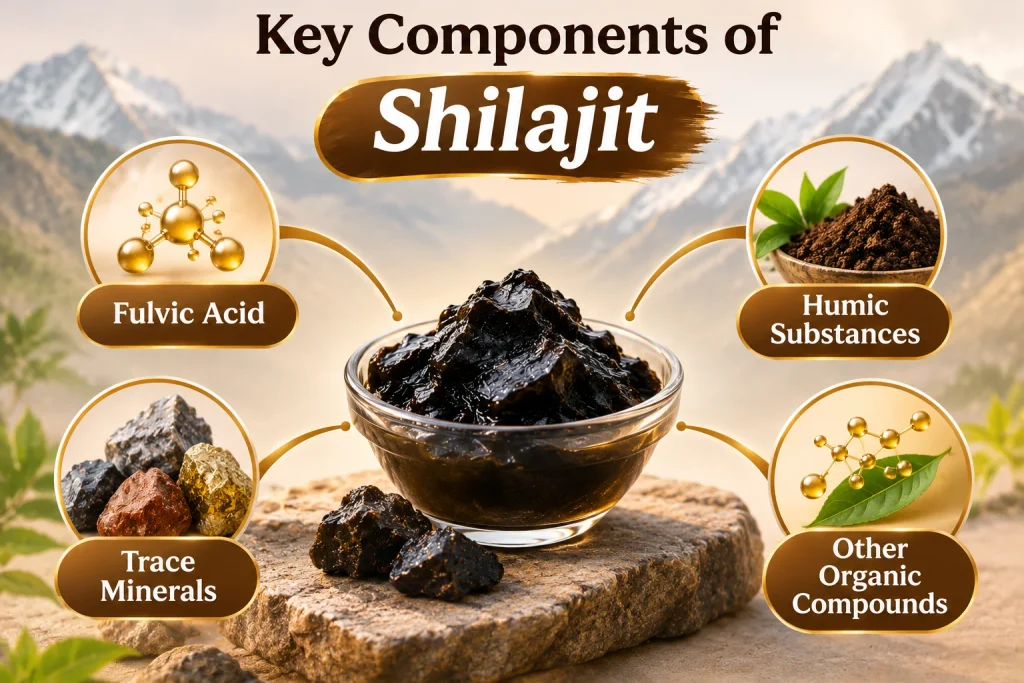
Shilajit is a complex natural material rather than a formulation containing just one active ingredient. Its composition can differ depending on its source and processing.
| Component | Description | Why it is discussed |
|---|---|---|
| Fulvic acid | A naturally occurring organic compound | Studied for antioxidant and other biological properties |
| Humic substances | Complex organic materials formed during decomposition | Contribute to Shilajit’s natural composition |
| Trace minerals | Various minerals may be present in different amounts | Part of its mineral composition; levels vary by source |
| Other organic compounds | Includes several naturally occurring compounds | Contribute to the complex chemical profile of Shilajit |
Important: The amount of each component is not identical in every Shilajit product. Exact percentages and mineral quantities should only be stated when supported by reliable product-specific laboratory testing.
Shilajit contains naturally occurring organic compounds, including fulvic acid and humic substances. Researchers are studying these components to understand their possible effects on brain health and other biological functions. However, more human studies are needed to confirm these potential benefits. You can explore this research in the scientific paper Shilajit: A Natural Phytocomplex with Potential Procognitive Activity.
Why Is Fulvic Acid Important?
Fulvic acid is one of the most discussed components of Shilajit. It is formed through the natural breakdown of organic material and has been investigated in laboratory studies for several biological properties.
Research has explored its antioxidant activity and possible interaction with certain proteins. However, evidence from test tubes or laboratory experiments does not establish that consuming Shilajit will produce the same effects in humans.
The overall quality of the product, its composition and its purification process also matter.
How to Take Shilajit Resin
Shilajit is available in several forms, but resin is one of the traditional forms commonly used in Ayurvedic wellness practices.
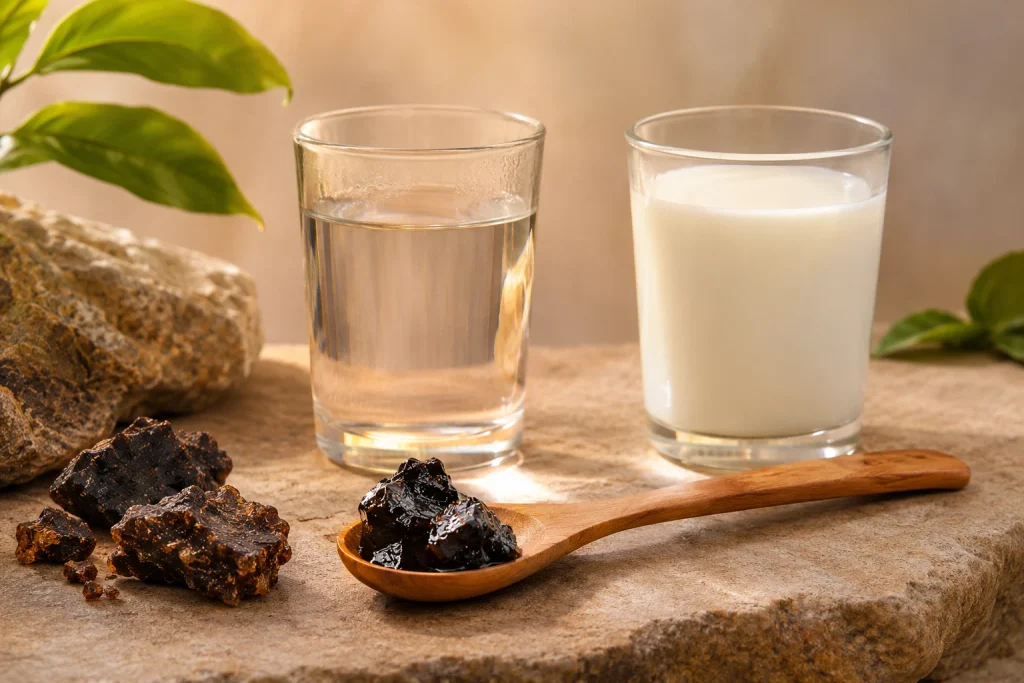
Kalera Ayurveda’s product information suggests taking its Shilajit Resin in a small quantity, dissolved in lukewarm water, milk or honey.
Keep these points in mind before using it:
- Follow the directions provided on the product packaging.
- Do not increase the suggested quantity on your own.
- Consult a qualified healthcare professional if you have a medical condition or take regular medication.
- Do not combine different Shilajit supplements without professional advice.
- Use only a product with appropriate purification and quality-testing information.
There is no universally established dosage that is suitable for everyone. Dosage recommendations can vary according to the product, its composition and the individual’s health requirements.
Shilajit Resin, Powder and Capsules: What Is the Difference?
Shilajit is sold in different forms. The most suitable option depends on the product’s quality, convenience and individual preference.
| Form | Description | What to consider |
|---|---|---|
| Shilajit Resin | Thick, sticky, concentrated-looking natural preparation | Check purification, testing and serving instructions |
| Shilajit Powder | Powdered preparation | Check the ingredient list and whether it contains additional ingredients |
| Shilajit Capsules | Pre-measured supplement form | Check the amount of Shilajit per serving and other ingredients |
No form should automatically be considered purer or more effective than another. Product quality and reliable testing are more important than the format alone.
Possible Side Effects and Precautions of Shilajit
Although Shilajit has a long history of traditional use, its safety is not fully established for every person or product.
Some people may experience digestive discomfort, nausea, headache, dizziness or allergic reactions. Product contamination is another important concern.
Raw or improperly purified Shilajit may contain heavy metals and microbial contaminants. These can pose health risks, which is why purification and independent quality testing are important.
Who Should Avoid Shilajit or Seek Medical Advice?
The following people should avoid self-medication and consult a healthcare professional before considering Shilajit.
| Person or condition | Important precaution |
|---|---|
| Pregnant or breastfeeding women | Safety is not sufficiently established; avoid use without medical advice |
| Children | There is limited safety information, so use is not recommended without specialist advice |
| People with hemochromatosis | Shilajit’s mineral composition may be a concern for people with iron overload |
| People with heart, liver or kidney conditions | Medical assessment is important before using supplements |
| People with diabetes or blood pressure concerns | Check possible interactions with existing medicines |
| People with allergies or regular medication | Review the complete ingredient list and seek professional guidance |
If you experience an unexpected reaction after taking Shilajit, stop using it and seek appropriate medical advice.
How to Choose Pure and Quality-Tested Shilajit
Choosing a suitable Shilajit product requires more than checking its colour, texture or price. Since its natural composition varies, quality control is especially important.
Consider these factors before purchasing:
- Purification information: Choose a product that clearly explains its purification process.
- Independent laboratory testing: Look for batch-specific testing for heavy metals and microbial contamination.
- Certificate of Analysis: Where available, check the Certificate of Analysis (COA) for the relevant batch.
- Ingredient transparency: The product should clearly identify its ingredients and any additional substances.
- Manufacturer details: Check the manufacturer’s information, contact details and product documentation.
- Packaging and expiry: Review the seal, storage directions, manufacturing date and expiry date.
A product description saying “pure” or “natural” is not a replacement for independent laboratory evidence. A Certificate of Analysis can help consumers assess quality, although testing does not guarantee that a supplement is suitable for every person.
Why Choose Kalera Ayurveda Shilajit Resin?
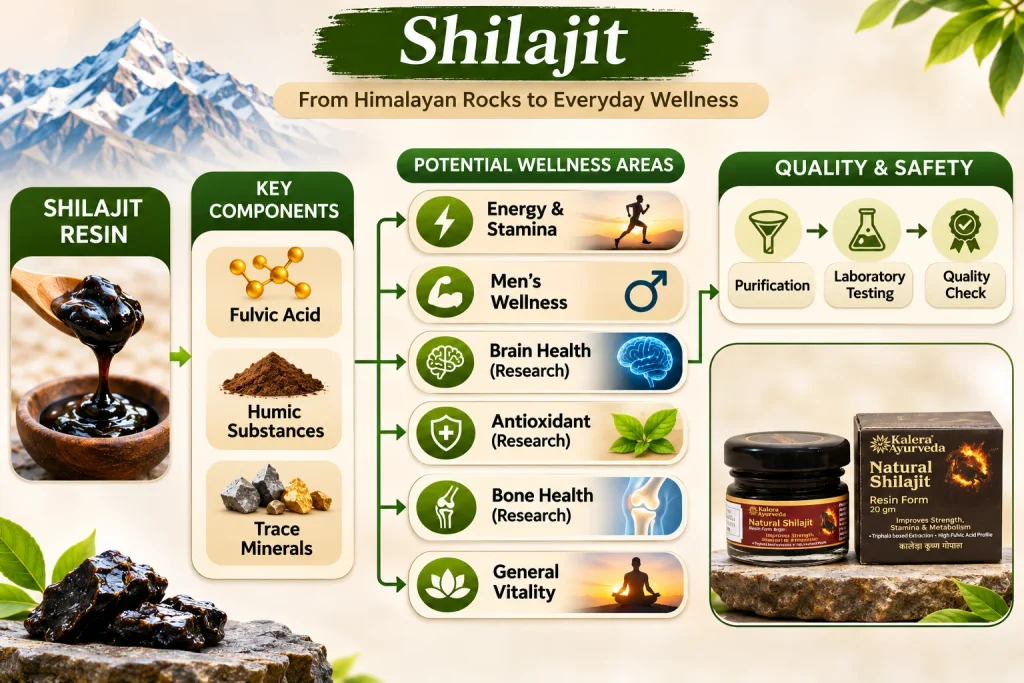
Kalera Ayurveda offers Pure Shilajit Resin for adults interested in traditional Ayurvedic wellness products.
According to the product information, Kalera Shilajit is sourced from the Himalayan region and is presented as a natural resin containing fulvic acid and minerals.
Before purchasing, review the product information, available packaging details and usage directions. You can also contact the brand if you need clarification about batch testing, purification or other quality-related details.
Explore the product: Kalera Ayurveda Shilajit Resin
FAQ About Shilajit
1. What are the main benefits of Shilajit?
Shilajit is traditionally used in Ayurveda for strength, stamina and general vitality. Modern research has explored its fulvic acid content and possible effects on energy-related processes, male reproductive health, brain function and bone health. However, evidence remains limited for many of these claims, and Shilajit is not a proven treatment for medical conditions.
2. Can women take Shilajit?
Shilajit is discussed in traditional wellness practices for both men and women. However, research on its benefits and safety in women is limited. Women who are pregnant, breastfeeding or trying to become pregnant should avoid using it without medical advice. Anyone considering it should check its suitability with a healthcare professional.
3. Does Shilajit increase testosterone?
Some small studies have explored the possible effect of purified Shilajit on testosterone levels in men. However, the available research is limited and does not establish it as a reliable treatment for low testosterone. People experiencing symptoms of hormonal imbalance should consult a healthcare professional for proper testing and advice.
4. What is the best time to take Shilajit?
The suitable time depends on the product’s directions and individual requirements. Some product instructions suggest taking Shilajit in the morning, but there is no universally established best time for everyone. Follow the label and consult a healthcare professional if you are unsure.
5. Can Shilajit be taken daily?
Some Shilajit products are intended for regular use according to their label directions. However, long-term safety information is limited, and daily use may not be suitable for everyone. Product purity, medical conditions and possible interactions with medicines should be considered before starting a routine.
6. Does Shilajit have side effects?
Possible side effects include nausea, digestive discomfort, headache, dizziness and allergic reactions. Contaminated or improperly purified Shilajit may also expose consumers to harmful substances, including heavy metals. Stop using the product if you experience an unexpected reaction and seek medical advice.
7. Is Shilajit resin better than capsules or powder?
Not necessarily. Resin, powder and capsules are different product formats, and none is automatically more effective or purer. The quality of the raw material, purification process, ingredient transparency and independent testing are more important when selecting a Shilajit supplement.
Final Thoughts
Shilajit is a traditional Ayurvedic substance that has gained attention for its natural composition, fulvic acid content and potential role in general wellness. Its traditional uses include supporting strength, stamina and vitality, while modern research continues to explore its possible effects on different aspects of health.
However, scientific evidence is still developing. Shilajit should not be treated as a guaranteed solution for fatigue, infertility, memory problems, diabetes or other medical conditions.
If you are considering Shilajit, focus on product quality, purification, independent testing and professional guidance. Kalera Ayurveda offers Pure Shilajit Resin as part of its Ayurvedic product range.
Explore Kalera Ayurveda Shilajit Resin and review its product details before making a purchase.