
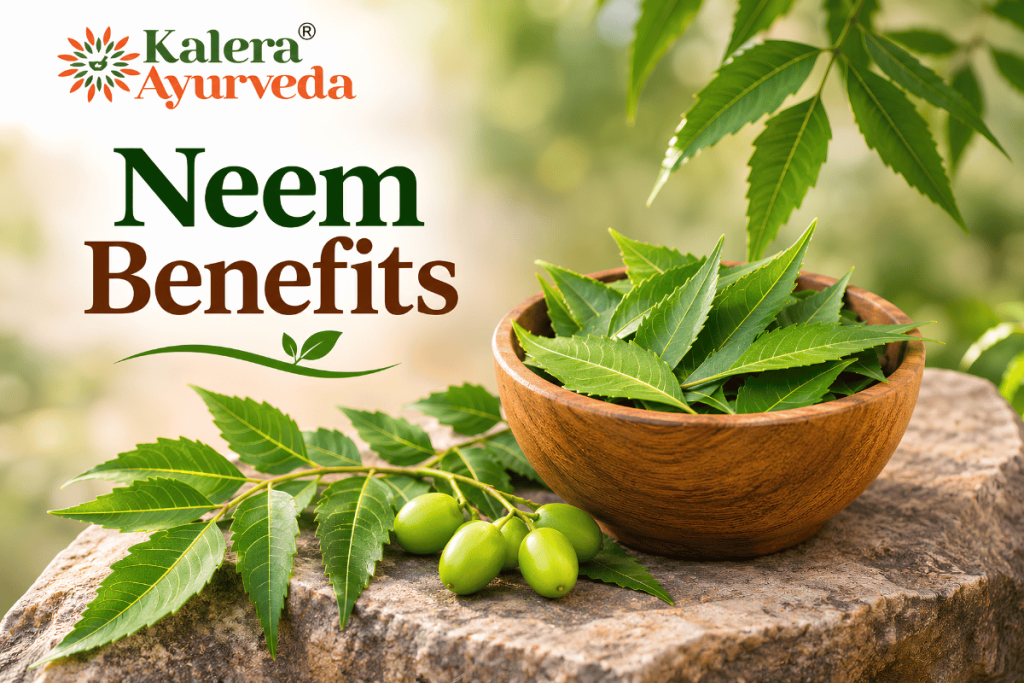
Neem, scientifically known as Azadirachta indica, is one of the most familiar trees in traditional Indian wellness. Its bitter leaves, seeds, bark and oil have been used in Ayurveda and other traditional practices for generations. Today, neem is also found in soaps, shampoos, skincare products, oral-care products and agricultural preparations.
But what are the actual neem benefits? Can neem help with skin and hair care? What does modern research say, and are there any risks to using it?
Neem contains several naturally occurring compounds that researchers are studying for their biological properties. However, traditional use does not automatically mean that every claimed benefit has been proven in humans. Understanding the different parts of the neem tree, their uses and their safety is important before choosing a neem-based product.
What Is Neem (Azadirachta Indica)?
Neem is an evergreen tree native to the Indian subcontinent. It grows in warm climates and is valued for its ability to tolerate dry conditions. Almost every part of the tree has a traditional or practical use.
The leaves, bark, flowers, fruits, seeds and seed oil are used in different preparations. Their chemical composition is not identical, which means neem leaf powder, neem oil and neem bark extract should not be treated as interchangeable products.
In Ayurveda, neem is traditionally associated with bitter taste and cleansing practices. It has been used in preparations related to skin care, oral hygiene and general wellness. Neem is also widely used in agriculture, particularly in plant-based pest-control products.
Important Compounds Found in Neem
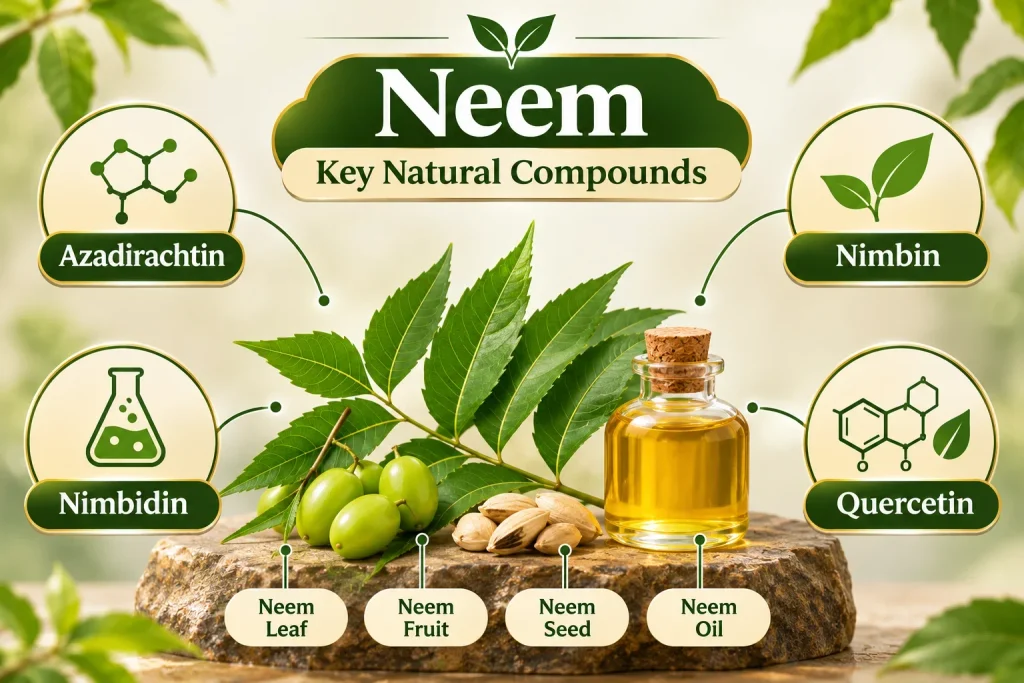
Neem contains several naturally occurring plant compounds, including limonoids, flavonoids and other phytochemicals. Some of these are being investigated in laboratory and experimental studies.
| Neem compound | Plant-related source | Why it is studied |
|---|---|---|
| Azadirachtin | Mainly seeds and seed oil | Known for its insect-repellent and insect-growth-regulating properties |
| Nimbin | Different neem parts | Studied for its biological and anti-inflammatory properties |
| Nimbidin | Neem seed oil | Investigated for potential biological activity |
| Quercetin | Neem leaves and other plant sources | A flavonoid studied for antioxidant properties |
| Salannin | Neem seeds | Known for its role in neem’s insect-repellent activity |
The presence of these compounds makes neem an interesting subject for research. However, the amount of each compound can vary according to the plant part, growing conditions and extraction method.
7 Traditional Neem Benefits and Uses
Neem has a long history of traditional use. The following sections explain its common applications and what current research can reasonably tell us about them.
1. Neem for Skin Care
Neem is widely used in traditional skincare preparations. Neem leaves and neem-based ingredients are found in soaps, face washes, creams and other topical products.
Its popularity comes partly from laboratory research investigating the antimicrobial and anti-inflammatory properties of certain neem extracts. These findings have encouraged further interest in neem for skin-related applications.
However, neem should not be described as a guaranteed treatment for acne, eczema, fungal infections or other skin conditions. Evidence from laboratory studies does not establish that applying a household neem preparation will produce the same results in people.
People interested in herbal skincare can also read about traditional Ayurvedic skin-care preparations to understand how different formulations are discussed in Ayurveda.
2. Neem for Hair and Scalp Care
Neem is commonly included in shampoos, hair oils and scalp-care products. Traditionally, neem leaves and oil have been used in hair-care routines, especially for keeping the scalp clean.
Some laboratory studies have explored the antimicrobial activity of neem compounds. However, strong clinical evidence that neem directly stops hair fall or increases hair growth is limited.
If you are building a hair-care routine, remember that hair fall can have several causes, including nutritional deficiencies, hormonal changes, stress and scalp conditions. Neem-based products should not replace a proper diagnosis.
You can also explore this guide on how to use Bhringraj oil for hair growth for information about another herb traditionally used in hair care.
3. Neem and Oral Hygiene
Neem twigs have traditionally been used as natural chewing sticks in parts of India. Neem extracts are also included in some toothpastes and mouth-care products.
Researchers have investigated whether neem preparations can influence oral bacteria and plaque. Some small studies have reported encouraging findings, but the evidence is not strong enough to conclude that neem reliably prevents cavities or replaces standard dental care.
For everyday oral hygiene, brushing twice daily with fluoride toothpaste, cleaning between teeth and visiting a dentist when needed remain important.
4. Neem’s Antimicrobial Properties
One of the most researched areas of neem is its potential antimicrobial activity. Certain neem extracts and compounds have shown activity against bacteria and fungi in laboratory experiments.
This has led researchers to investigate possible applications in skincare, oral care and other areas. However, laboratory results do not automatically translate into effective treatments for infections in humans.
The effect can also differ depending on the plant part, extract concentration and preparation method. Neem should not be used as a replacement for prescribed antibiotics, antifungal medicines or professional medical treatment.
5. Neem and Inflammation Research
Some neem compounds, including nimbin and related phytochemicals, have been studied for their possible effects on inflammatory pathways.
Most of the findings discussed in this area come from laboratory experiments or animal studies. These studies help researchers understand how plant compounds may behave, but they do not establish that neem can treat arthritis, autoimmune conditions or chronic inflammation in people.
More carefully designed human studies are needed before making medical claims about these uses.
6. Neem and Metabolic Health Research
Neem is sometimes discussed in traditional wellness practices related to blood sugar and metabolic health. Modern researchers have also studied neem leaf extracts in experimental models.
Some animal and laboratory studies have reported changes in blood glucose and lipid-related measurements. However, these findings are not enough to recommend neem for managing diabetes, cholesterol or obesity.
People taking diabetes medicines should be especially careful. Neem products may create additional risks, and their use should be discussed with a qualified healthcare professional.
7. Neem for Natural Pest Control
Neem is not used only in traditional wellness. It also has an important role in agriculture.
Neem seed oil contains azadirachtin, a compound known for its insect-growth-regulating and pest-repellent properties. Certain neem-based agricultural products are used to manage pests on crops and garden plants.
These products are formulated for agricultural purposes. They must not be confused with products intended for human skin or oral use.
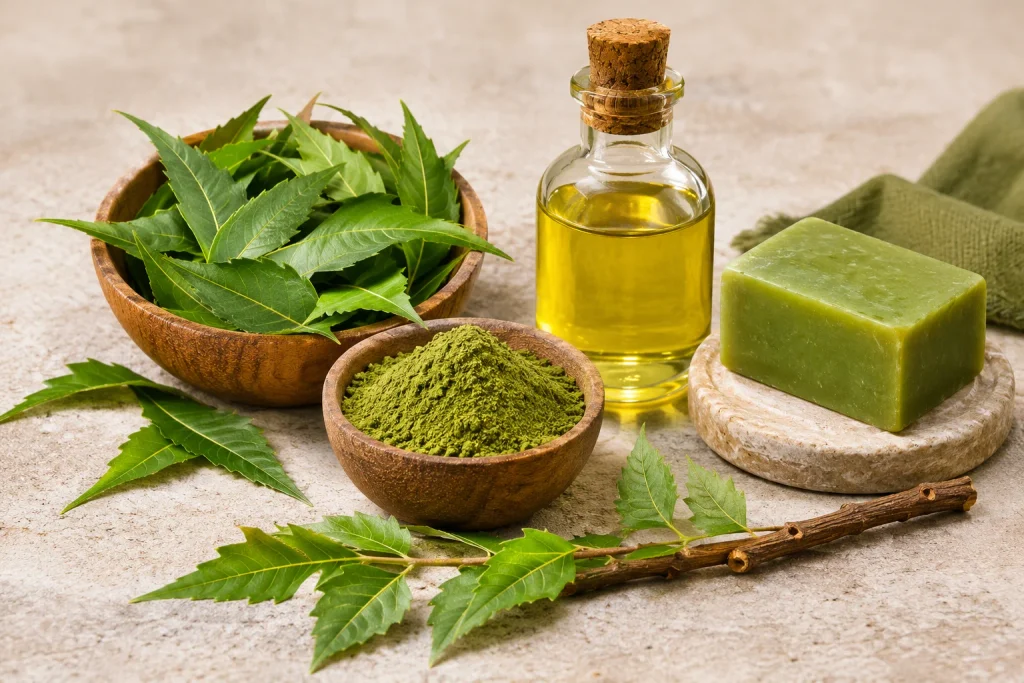
Neem Leaves, Neem Oil and Neem Powder: What Is the Difference?
The term neem can refer to several different preparations. Their uses, concentration and safety considerations can vary considerably.
| Neem preparation | Common applications | Important consideration |
|---|---|---|
| Neem leaves | Traditional external preparations and some commercial products | Leaf preparations vary in strength and composition |
| Neem leaf powder | Used in some traditional and cosmetic preparations | Quality, cleanliness and source matter |
| Neem seed oil | Agricultural products and selected topical formulations | Do not swallow neem oil; ingestion can cause serious poisoning |
| Neem bark extract | Investigated in selected research areas | Extracts are not interchangeable with leaf or seed products |
| Neem-based skincare products | Soaps, creams and cleansers | Check the complete ingredient list and follow product directions |
A product’s safety depends on its ingredients, concentration, manufacturing quality and intended route of use. A neem oil sold for gardening, for example, is not automatically suitable for application to the skin.
What Does Scientific Research Say About Neem?
Scientific interest in neem includes its antimicrobial, antioxidant, anti-inflammatory and other biological properties. Research has examined different parts of the plant using laboratory experiments, animal models and a limited number of human studies.
A useful overview is available in this research article on neem’s evidence-based health benefits. It discusses neem’s compounds, traditional applications and areas being investigated by researchers.
The Memorial Sloan Kettering Cancer Center’s neem information also explains the difference between potential uses and established clinical evidence, along with important safety concerns.
Overall, neem is a promising subject for scientific study, but evidence remains limited for many health claims. More human research, standardized preparations and long-term safety evaluations are needed.
Possible Side Effects and Safety Precautions
Natural ingredients are not automatically safe for everyone. Neem can cause unwanted reactions, particularly when used incorrectly or in concentrated forms.
Possible Side Effects
- Skin irritation: Topical neem products may cause redness, itching, dryness or allergic contact dermatitis in some people.
- Digestive problems: Certain oral preparations may cause nausea, vomiting or other stomach-related symptoms.
- Serious poisoning: Swallowing neem oil has been associated with severe poisoning, including neurological and metabolic complications.
- Possible medication interactions: Neem may affect blood glucose, so people taking diabetes medicines should seek medical advice before using neem supplements.
- Uncertain long-term safety: The safety of many neem preparations, especially with repeated oral use, has not been established.
Who Should Be Careful?
| Group | Safety advice |
|---|---|
| Pregnant women | Avoid medicinal neem preparations unless specifically advised by a qualified healthcare professional |
| Breastfeeding women | Safety information is limited; seek medical advice before use |
| Children | Do not give neem oil or neem supplements without medical direction; neem oil ingestion can be particularly dangerous |
| People with diabetes | Discuss neem use with a healthcare professional because of possible blood-sugar effects |
| People taking regular medicines | Check for possible interactions before using oral neem products |
| People with sensitive skin | Patch-test suitable topical products and stop use if irritation develops |
Important: Never swallow neem seed oil or use agricultural neem products on the body. If someone accidentally swallows neem oil, seek urgent medical or poison-control assistance rather than waiting for symptoms.
How to Choose a Neem-Based Product
If you are considering a neem-based skincare or personal-care product, check a few details before using it.
- Check the intended use: Choose a product specifically formulated for skin, hair or another stated purpose.
- Read the ingredient list: Look for the neem ingredient and check for other components that may irritate your skin.
- Check product quality: Prefer products with clear manufacturer details, batch information and quality standards.
- Follow the directions: Do not increase the quantity or frequency beyond the product instructions.
- Test topical products carefully: Apply a small amount to a limited area first, provided the product directions allow it.
- Stop if a reaction occurs: Discontinue use if you notice burning, itching, swelling or persistent redness.
Neem is only one of several ingredients used in traditional Ayurvedic skincare. For example, you can read about Kumkumadi Tail and its traditional skincare use to learn about another type of Ayurvedic preparation. Different formulations have different ingredients and intended uses.
FAQ About Neem Benefits
1. What are the main benefits of neem?
Neem is traditionally used in Indian wellness practices for skin care, scalp care and oral hygiene. Its leaves, bark, seeds and oil contain natural compounds such as azadirachtin, nimbin and quercetin, which have attracted scientific interest. Laboratory research has explored antimicrobial, antioxidant and anti-inflammatory properties of certain neem extracts. Neem also has practical agricultural uses, especially in plant-based pest management. However, the strength of evidence differs across these areas. Many findings come from laboratory or animal studies, so neem should not be considered a proven treatment for infections, diabetes, skin diseases or other medical conditions.
2. Is neem good for the skin?
Neem has a long history of traditional use in skincare and is included in soaps, creams, face washes and other topical products. Some neem compounds have shown antimicrobial and anti-inflammatory activity in laboratory research, which is one reason researchers continue to study its possible dermatological applications. However, this does not mean neem will treat every skin concern or work equally well for everyone. Some people may experience dryness, redness, itching or allergic reactions after applying neem products. Choose a product designed for topical use, follow its instructions and discontinue it if irritation develops. Persistent acne, rashes or other skin problems should be assessed by a dermatologist.
3. Can neem help with dandruff and hair fall?
Neem is traditionally used in scalp-care routines and is found in some shampoos and hair oils. Its plant compounds have been investigated for antimicrobial properties, which has encouraged interest in neem for scalp hygiene. However, there is not enough strong human evidence to say that neem reliably removes dandruff, stops hair fall or promotes new hair growth. Dandruff may be related to scalp conditions, while hair fall can result from nutritional deficiencies, hormonal changes, illness, stress or other causes. A neem-based product may be part of a personal-care routine if it suits your scalp, but it should not replace appropriate treatment or medical evaluation.
4. Can neem leaves be consumed daily or taken as neem water?
Neem leaves have traditional uses, but this does not establish that drinking neem water or consuming neem leaves every day is safe or beneficial. The safety of oral neem products depends on the plant part, preparation, concentration, quantity and the person’s health. There is no universally established daily dose that can be recommended for everyone. Neem seed oil should never be swallowed because serious poisoning has been reported after ingestion. People with diabetes, those taking regular medicines, pregnant or breastfeeding women, and children should be particularly cautious. Before taking neem internally, speak with a qualified healthcare professional who can assess the specific preparation and your health circumstances.
5. What are the side effects of neem, and who should avoid it?
Neem may cause skin irritation, itching, dryness or allergic contact dermatitis when applied topically. Some oral preparations may cause digestive symptoms, while swallowing neem oil can lead to severe poisoning, including neurological complications. Pregnant women should avoid medicinal neem preparations unless specifically advised by a healthcare professional. Breastfeeding women and children should also avoid self-medication because safety information is limited and serious risks have been reported, particularly with neem oil ingestion. People taking diabetes medicines or other regular medication should discuss possible interactions before using neem supplements. If you experience an adverse reaction, stop using the product and seek medical advice.
6. What is the difference between neem leaves, neem powder and neem oil?
Neem leaves are the fresh or dried leaves of the tree and are used in some traditional preparations. Neem powder is generally made by drying and grinding plant material, often leaves, although the exact source should be checked on the label. Neem oil is commonly extracted from the seeds and has a different chemical composition from leaf preparations. It is widely used in agricultural pest-control products and is also included in selected topical formulations. These preparations cannot be used interchangeably. Their concentration, intended purpose and safety profile may differ, so always check the product label and never assume that neem oil meant for plants is suitable for human use.
7. Is there scientific proof that neem treats infections or diabetes?
Research has identified biological activities in certain neem compounds, including antimicrobial effects in laboratory experiments and changes in blood-glucose measurements in some animal studies. These findings help scientists understand the plant and identify areas for further investigation. However, laboratory results and animal studies are not the same as proof of effective treatment in humans. Current evidence is not sufficient to recommend neem as a replacement for antibiotics, antifungal medicines, diabetes medication or other prescribed treatments. People with an infection or diabetes should follow professional medical advice. Neem may be discussed as a research subject or traditional ingredient, but its medical benefits and safe use require better-quality human studies.
Final Thoughts
Neem remains an important plant in traditional Indian practices, personal care and agriculture. Its leaves, seeds, bark and oil contain different natural compounds, and researchers continue to investigate their possible applications.
The most sensible approach is to understand what a neem preparation is intended for, check its quality and use it carefully. Traditional use can provide useful context, but it should not be confused with established medical evidence. For persistent health concerns or before taking neem internally, consult a qualified healthcare professional.