
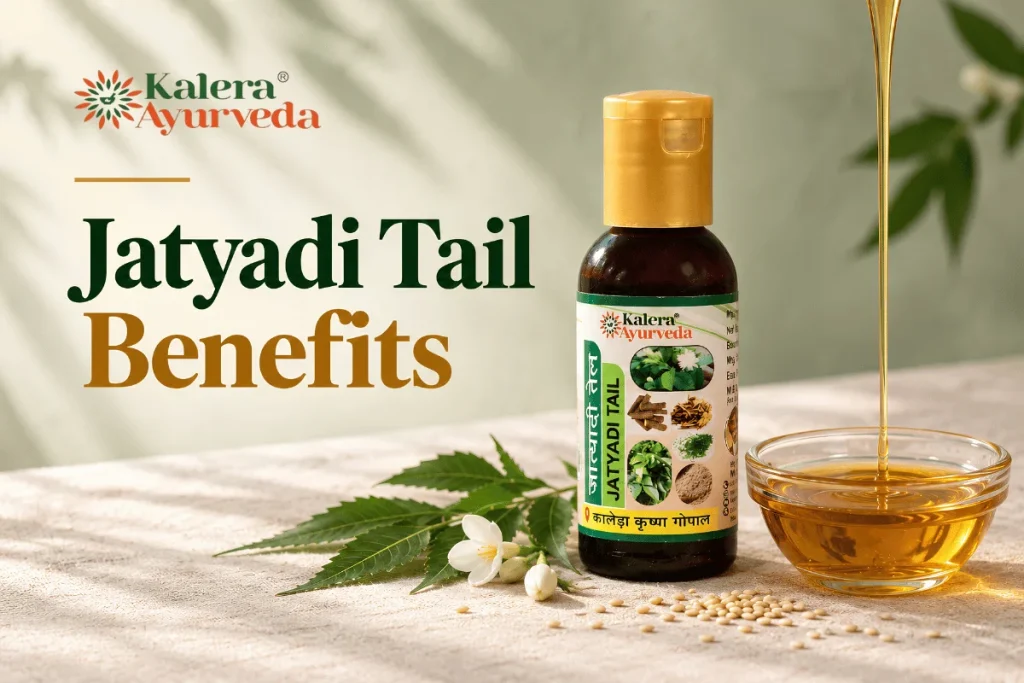
Minor skin injuries, cuts and irritated skin need appropriate care to protect the affected area and support recovery. In Ayurveda, several traditional herbal preparations are used for external skin care. One such formulation is Jatyadi Tail, also known as Jatyadi Taila or Jatyadi Oil.
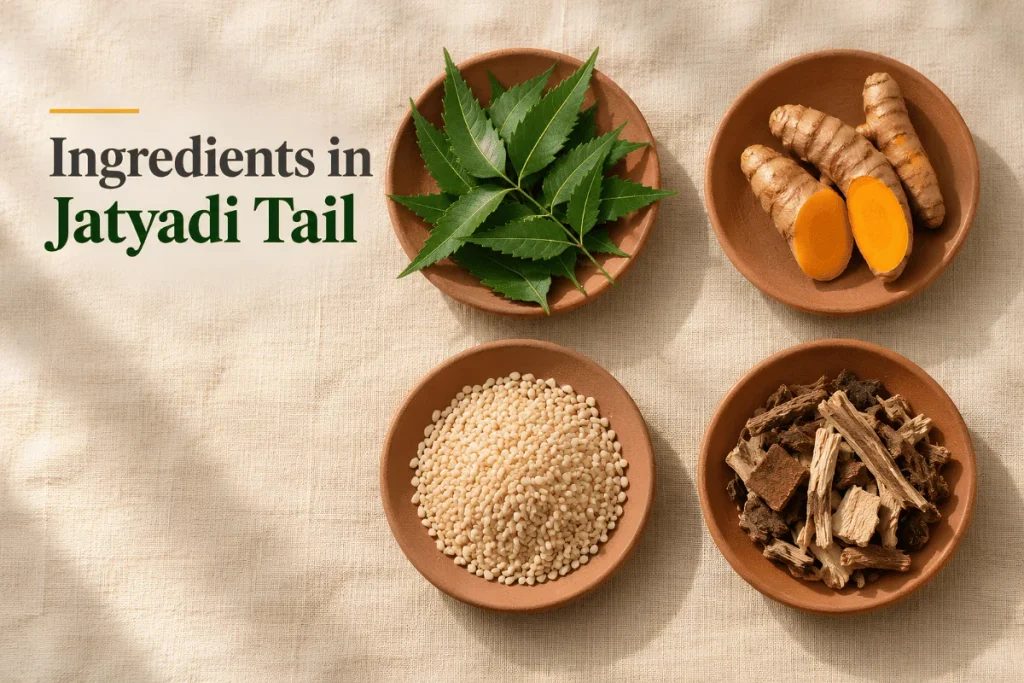
Jatyadi Tail benefits are traditionally associated with wound care, skin comfort and the care of certain skin conditions. It is a medicated oil made with a combination of herbs and an oil base. Kalera Ayurveda Jatyadi Tail contains ingredients such as Jati, Neem, Haldi, Manjistha and sesame oil.
In this guide, we will explore its traditional uses, key ingredients, application guidance and important precautions to consider before using it.
What Is Jatyadi Tail?
Jatyadi Tail is a traditional Ayurvedic oil formulated for external application. Its herbal ingredients have a history of use in Ayurvedic skin and wound care practices.
Kalera Ayurveda Jatyadi Tail is available in a 50 ml pack and is intended for external use. Its formulation combines several botanical ingredients with sesame oil as the base.
The product is traditionally associated with wound care and skin wellness. However, the suitability of an oil depends on the condition being treated, the severity of the problem and the individual’s skin sensitivity. It should not replace professional assessment or appropriate wound treatment
7 Traditional Jatyadi Tail Benefits and Uses
1. Supports Traditional Wound Care
One of the best-known traditional uses of Jatyadi Tail is external wound care. Ayurvedic practitioners have used Jatyadi formulations in wound-management practices.
However, wounds differ in their depth, cause and risk of infection. Do not apply the oil to a deep, heavily bleeding or infected wound without medical advice.
2. Helps Care for Minor Skin Injuries
Minor cuts and superficial skin injuries need proper cleaning and protection. Jatyadi Tail is traditionally used in external skin-care practices, but its suitability for a particular injury should be confirmed with a qualified healthcare professional.
For open injuries, follow appropriate first-aid advice rather than relying on an herbal oil alone.
3. Supports Skin Comfort
Some of the herbs in Jatyadi Tail have a history of traditional use in skin-care preparations. The formulation may be considered as part of an appropriate external-care routine when recommended by a qualified practitioner.
Persistent itching, redness, swelling or discomfort should be evaluated to identify the underlying cause.
4. Traditionally Used for Irritated Skin
Neem, Haldi and other botanicals are commonly used in traditional skin-care formulations. These ingredients contribute to the traditional use of Jatyadi Tail for skin wellness.
Nevertheless, eczema, boils, fungal infections and other skin conditions may require different treatments. Do not assume that Jatyadi Tail will cure these conditions or use it as a substitute for prescribed medication.
5. Contains Herbs Traditionally Associated With Skin Care
Jatyadi Tail combines several botanicals that are valued in Ayurvedic formulations. Neem, Manjistha, Daruharidra and Haldi are among the ingredients traditionally used in preparations intended for skin care.
The presence of these ingredients does not establish that the finished product will treat every skin problem. Benefits depend on the formulation, its quality and how it is used.
6. Offers a Traditional External-Care Option
People interested in Ayurvedic practices may consider Jatyadi Tail as an external-care formulation after checking whether it is appropriate for their needs.
The important point is to use the product according to its directions and professional advice, especially when the affected area is damaged or sensitive.
7. Has Some Preliminary Research on Jatyadi-Based Wound Care
Research has examined Jatyadi formulations in wound management. A 2023 randomized clinical trial involving 45 participants compared Jatyadi tulle, Madhughrita tulle and honey tulle for clean wounds. The results were encouraging, but the study investigated specific wound-dressing materials, not Kalera Ayurveda’s Jatyadi Tail product itself.
Therefore, this research should not be interpreted as proof that every Jatyadi oil works in the same way or treats all types of wounds.
Read the published clinical study on Jatyadi-based wound dressings for more details.
Key Ingredients in Kalera Ayurveda Jatyadi Tail
Kalera Ayurveda’s product description lists a combination of herbs and sesame oil. Each ingredient contributes to the formulation’s traditional Ayurvedic profile.
| Ingredient | Botanical name | Traditional context |
|---|---|---|
| Jati | Jasminum officinale | Traditionally used in Ayurvedic topical formulations |
| Neem | Azadirachta indica | Commonly included in traditional skin-care preparations |
| Patola | Trichosanthes dioica | Used in classical Ayurvedic formulations |
| Karanja | Pongamia pinnata | Traditionally used in external herbal preparations |
| Yashtimadhu | Glycyrrhiza glabra | Also known as liquorice; used in traditional formulations |
| Haldi | Curcuma longa | Turmeric, widely used in traditional skin-care preparations |
| Daruharidra | Berberis aristata | A botanical used in Ayurvedic formulations |
| Manjistha | Rubia cordifolia | Traditionally associated with skin-care formulations |
| Lodhra | Symplocos racemosa | Used in several traditional Ayurvedic preparations |
| Haritaki | Terminalia chebula | A well-known ingredient in Ayurveda |
| Til Tail | Sesame oil | The oil base listed in the formulation |
The product description also lists Kuth, Kutki, Padmaka, Neelkamal, Sariva and Tuthya, among other ingredients. Please refer to the product label for the complete formulation and any additional usage instructions.
How to Use Jatyadi Tail
The correct method of application depends on the condition and the advice provided by a qualified healthcare professional.
Kalera Ayurveda’s product page recommends external application and mentions using the oil two to three times daily or as directed by a healthcare professional. That general instruction should not automatically be applied to every type of wound.
Keep these points in mind:
- Check the instructions: Read the product label before application.
- Clean the area appropriately: Follow suitable wound-care guidance for the affected area.
- Use clean hands and materials: Avoid contaminating the bottle or the affected skin.
- Use only as directed: Do not increase the amount or frequency without professional advice.
- Avoid unsupervised internal use: Do not swallow the oil or apply it internally unless a qualified practitioner specifically directs you to use an appropriate formulation in that way.
For a deep wound, a wound that does not heal, or a problem involving the anal or genital area, seek medical advice before using the product.
Safety Precautions and Possible Side Effects
Although Jatyadi Tail is a traditional herbal formulation, natural ingredients can still cause unwanted reactions.
Before using it, remember the following precautions:
- External use only: Do not ingest the oil.
- Watch for irritation: Stop using it if you notice increased redness, itching, burning, swelling or a rash.
- Seek advice for sensitive skin: Ask a healthcare professional before use if you have a history of skin allergies.
- Consult a professional during pregnancy or breastfeeding: Get individual advice before using the product.
- Take wounds seriously: Deep cuts, animal bites, significant burns, pus, fever or rapidly spreading redness need prompt medical assessment.
- Do not delay treatment: People with diabetes, poor circulation or reduced immunity should seek professional advice for wounds, even when they initially appear minor.
Do not use an herbal oil as a replacement for prescribed wound care, antibiotics or other medical treatment.
Where to Buy Kalera Ayurveda Jatyadi Tail
If you are looking for a traditional Ayurvedic oil for external skin care, you can explore Kalera Ayurveda Jatyadi Tail.
The product is listed in a 50 ml pack for ₹100 on the product page. Check the website for the latest price, availability and delivery details before ordering.
Visit the Kalera Ayurveda Jatyadi Tail product page to review its ingredients, product instructions and purchasing information.
Kalera Ayurveda also offers other traditional oils, including Kasisadi Tail, Anu Tail and Shadbindu Tail. Each product has its own intended use, so check the individual product information rather than treating these oils as interchangeable.
FAQ About Jatyadi Tail
1. What are the main Jatyadi Tail benefits?
Jatyadi Tail is a traditional Ayurvedic herbal oil mainly associated with external wound care and skin wellness. Its formulation contains ingredients such as Neem, Haldi, Jati and Manjistha, which have a history of use in traditional Ayurvedic preparations. It may be considered for appropriate external-care needs under professional guidance. However, its effectiveness can vary depending on the condition, and it should not replace medical treatment for serious wounds or skin problems.
2. Can Jatyadi Tail be applied to open wounds?
Jatyadi Tail is traditionally used in wound-care practices, but applying oil to an open wound is not appropriate in every situation. Before using it, check the product instructions and consult a qualified healthcare professional, particularly if the wound is deep, infected, bleeding heavily or not healing. Proper wound cleaning and suitable medical care are important to reduce the risk of complications. Do not delay treatment by relying only on an herbal preparation.
3. What are the main ingredients in Kalera Ayurveda Jatyadi Tail?
Kalera Ayurveda Jatyadi Tail contains several herbal ingredients, including Jati, Neem, Patola, Karanja, Yashtimadhu, Kuth, Haldi, Daruharidra, Manjistha, Kutki, Padmaka, Lodhra, Haritaki, Neelkamal and Sariva. The product description also lists Tuthya and sesame oil as part of the formulation. These ingredients are used in traditional Ayurvedic preparations for different purposes. For the complete ingredient list and product-specific details, always refer to the official product label.
4. How often can Jatyadi Tail be used?
According to Kalera Ayurveda’s product description, Jatyadi Tail may be applied externally two to three times daily or as directed by a healthcare professional. However, the suitable frequency depends on the condition being treated and the location and severity of the affected area. Follow the product label and professional advice rather than increasing the frequency on your own. If irritation or discomfort develops after application, stop using the oil and seek appropriate guidance.
5. Can Jatyadi Tail cause side effects?
Although Jatyadi Tail is made with traditional herbal ingredients, some people may experience skin irritation, redness, itching, burning or an allergic reaction. Sensitivity can occur because of individual ingredients, including the oil base. Before using the product, check its ingredient list and seek professional advice if you have sensitive skin or a history of allergies. Stop applying it if symptoms worsen. If you experience significant swelling, severe pain or a serious reaction, seek medical attention promptly.
6. Is Jatyadi Tail suitable for every skin condition?
No, Jatyadi Tail is not a universal treatment for all skin conditions. Problems such as eczema, fungal infections, boils, burns and non-healing wounds can have different causes and may require specific treatments. Although Jatyadi formulations have traditional uses in skin and wound care, evidence for one preparation does not prove that every product will be effective for every condition. Consult a healthcare professional for a proper assessment, especially if symptoms persist, spread or become more severe.
Conclusion
Jatyadi Tail is a traditional Ayurvedic herbal oil associated with external skin care and wound-management practices. Kalera Ayurveda’s formulation contains several botanicals, including Jati, Neem, Haldi and Manjistha, alongside a sesame oil base.
Understanding the ingredients, following the product instructions and taking appropriate safety precautions are essential before use. While research on certain Jatyadi-based wound-care preparations is promising, more evidence is needed to establish the effectiveness of individual products for specific conditions.
For product details, ingredients and purchasing information, visit the Kalera Ayurveda Jatyadi Tail page.