
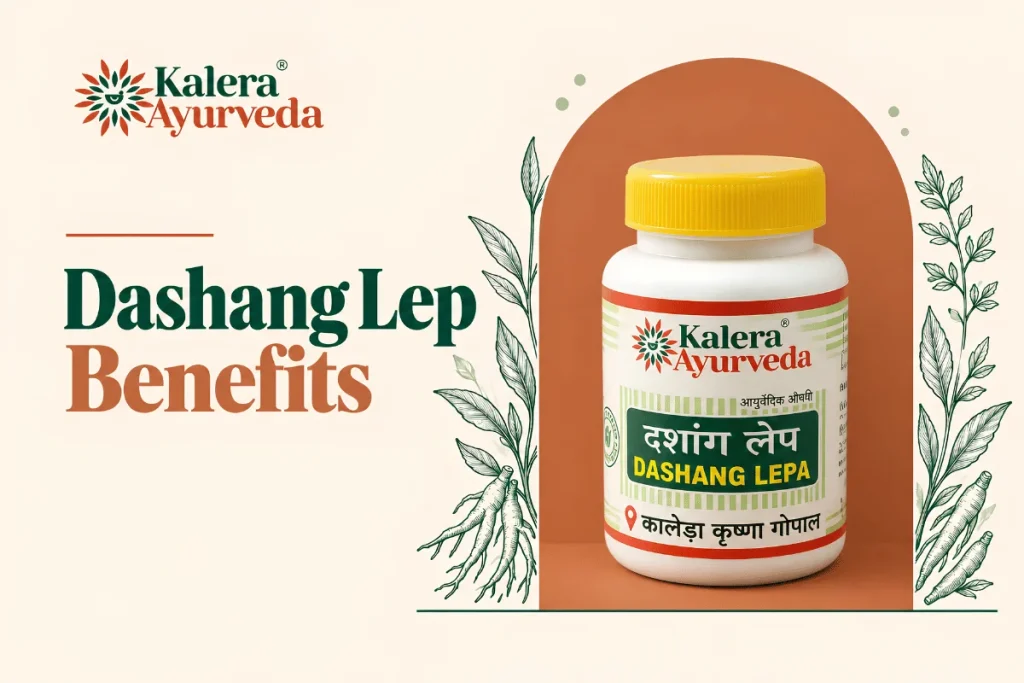
Dashang Lep Benefits are traditionally associated with external care for joint stiffness, muscle discomfort and mild soreness after everyday physical activity. Dashang Lep is an Ayurvedic herbal paste intended for application to the skin, not for oral consumption.
Kalera Ayurveda’s Dashang Lep is available in a 50 gm pack and is described as a supportive preparation for joint and muscle comfort, including mild stiffness and discomfort after minor sprains or strains. It is intended to complement rest and appropriate care rather than replace medical treatment.
In this guide, we will explore its traditional uses, the ingredients listed by Kalera Ayurveda, how to apply it, and the precautions to understand before use.
What Is Dashang Lep in Ayurveda?
Dashang Lep is a traditional Ayurvedic external preparation. The word lep refers to a paste applied to the skin, while Dashang is traditionally associated with a formulation containing ten components.
For further reading, explore this research study on Dashang Lepa, which examined its traditional Ayurvedic use in managing Vranashopha.
Classical Dashang Lepa formulations are described in Ayurvedic references for external application. However, commercial products may differ in their composition, preparation and intended use.
Kalera Ayurveda positions its Dashang Lep as a joint and muscle care paste for areas affected by mild stiffness, soreness or discomfort after physical activity. The product is listed at ₹90 for a 50 gm pack on its product page.
It is important to distinguish the traditional formulation from the specific product. Ingredients and claims published by other brands should not automatically be attributed to Kalera’s version.
7 Dashang Lep Benefits and Traditional Uses
1. Supports Joint Comfort
Joint stiffness can occur after prolonged sitting, repetitive activity or physical exertion. A topical paste may form part of a supportive self-care routine for mild discomfort.
Kalera Ayurveda describes Dashang Lep as an external preparation intended to support joint comfort and movement. It should not be presented as a cure for arthritis, joint damage or other diagnosed conditions.
For people exploring other traditional external preparations, Kalera Peedashamak Tail is another product to discuss with an Ayurvedic practitioner when considering a suitable topical care routine.
2. Helps With Mild Muscle Discomfort
Muscle soreness may follow exercise, household work or other physical activity. Gentle rest and gradual return to normal movement are often important parts of recovery.
Kalera’s Dashang Lep is positioned as a supportive topical preparation for mild muscle discomfort. Its intended role is to complement sensible self-care, not to replace assessment when pain is severe, persistent or unexplained.
3. Supports Comfort After Minor Sprains and Strains
Minor sprains and strains can cause soreness and restricted movement. Kalera’s product description identifies mild sprains and strains among the situations in which Dashang Lep may be used as a supportive external aid.
However, significant swelling, severe pain, deformity or difficulty bearing weight can indicate a more serious injury. Such symptoms should be assessed by a healthcare professional rather than managed with a topical paste alone.
For other traditional external applications, Kalera Narayan Tail is a separate Ayurvedic oil. Its formulation and application are different from those of Dashang Lep, so the products should not be treated as interchangeable.
4. May Support Comfort During Recovery From Physical Activity
After strenuous exercise or physical work, some people experience temporary muscle tightness or stiffness. A suitable topical preparation may be included in a broader comfort routine when appropriate.
Kalera describes Dashang Lep as an external aid that can complement rest, gentle movement and other recommended care. It is not a substitute for rehabilitation advice or treatment when an injury requires medical attention.
5. May Help Ease Mild Localised Swelling
Some classical Dashang Lepa preparations have been studied for local inflammatory swelling. However, research involving a particular classical formulation does not automatically establish the effectiveness of every commercial product.
A small preliminary clinical study published in the International Journal of Ayurvedic Medicine investigated Dashang Lepa mixed with cow’s ghee in 20 patients with cellulitis. The study reported improvements in several symptoms, including pain and swelling. The findings relate to that specific formulation and clinical setting, not proof that Kalera Dashang Lep treats cellulitis or other infections.
If swelling is spreading, the skin is hot or increasingly red, or fever develops, seek prompt medical assessment. Do not rely on a topical paste to manage a possible infection.
6. Provides a Convenient External Care Option
A ready-to-use paste can be convenient when compared with preparing a traditional herbal paste from separate ingredients.
Kalera describes its Dashang Lep as a smooth external preparation intended for targeted application. This can make it easier to include in a simple self-care routine, provided the product label is followed and the skin is suitable for application.
Convenience does not mean that it is appropriate for every type of pain, injury or skin condition.
7. Complements a Broader Joint and Muscle Care Routine
Topical care is only one part of managing mild stiffness or discomfort. Adequate rest, appropriate activity modification and gradual return to movement may also matter, depending on the cause.
For people comparing topical pastes with oils, Kalera Mahavishgarbh Oil is another external Ayurvedic product positioned for musculoskeletal wellness. It has a different formulation and method of application, so suitability should be considered individually.
Ingredients in Kalera Dashang Lep
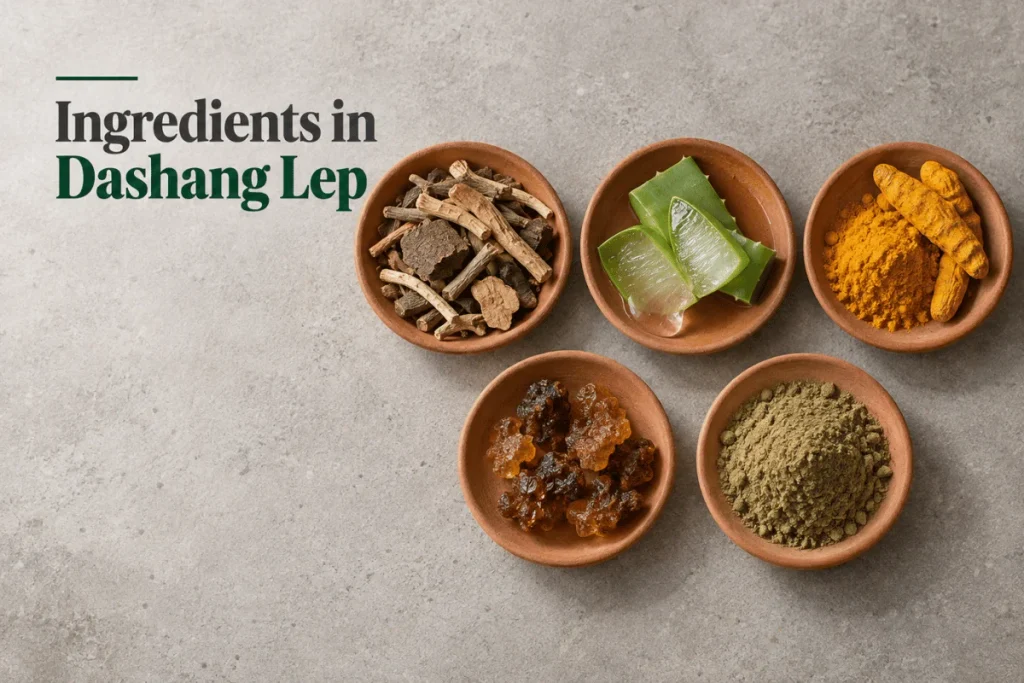
Kalera’s product description lists the following ingredients or ingredient groups:
| Ingredient | Description in the product context |
|---|---|
| Dashamoola blend | A traditional Ayurvedic blend of ten roots, described as supporting joint and muscle care |
| Aloe vera | Included for its soothing role in topical care |
| Turmeric | A traditional herbal ingredient |
| Guggul resin | Included in the product description in connection with traditional joint and muscle support |
| Natural powders and herbal extracts | Form the paste’s overall herbal preparation |
This table reflects the ingredients described on Kalera’s product page. It is not a verified complete quantitative formulation.
Competitor products marketed as Dashang Lep may list ten individual herbs such as Shirisha, Yashtimadhu, Tagara, Rakta Chandana, Ela and Jatamansi. Those lists may describe different classical or commercial formulations and should not be copied as Kalera’s exact ingredient list without confirmation from its packaging or manufacturer.
How to Apply Dashang Lep
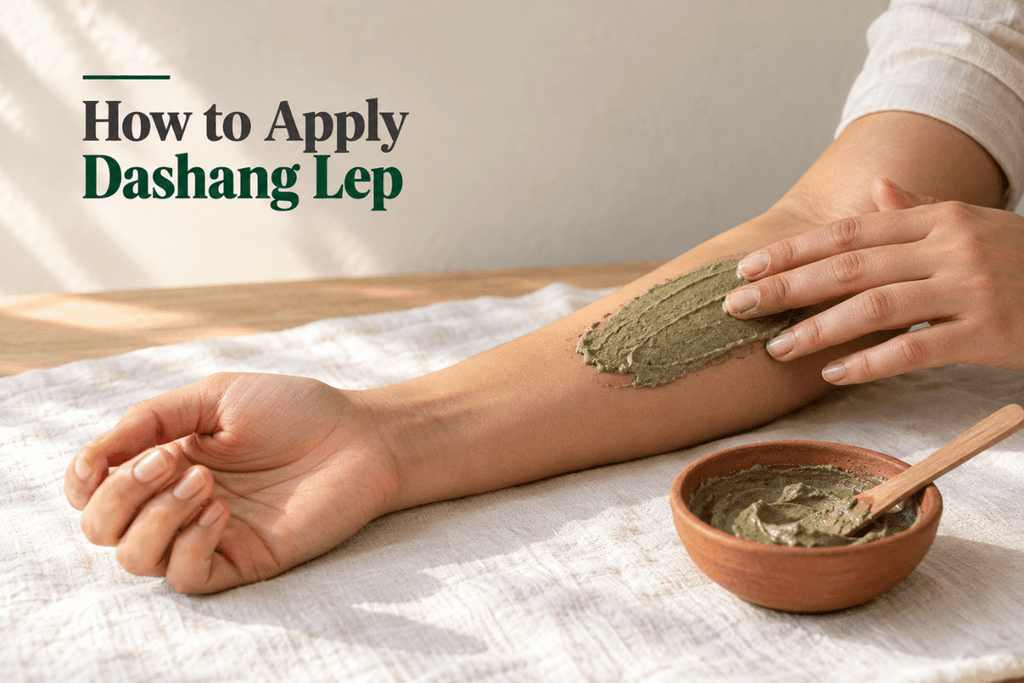
Kalera’s product information describes Dashang Lep as an external paste. Follow the instructions printed on the product packaging, as application guidance can vary by formulation.
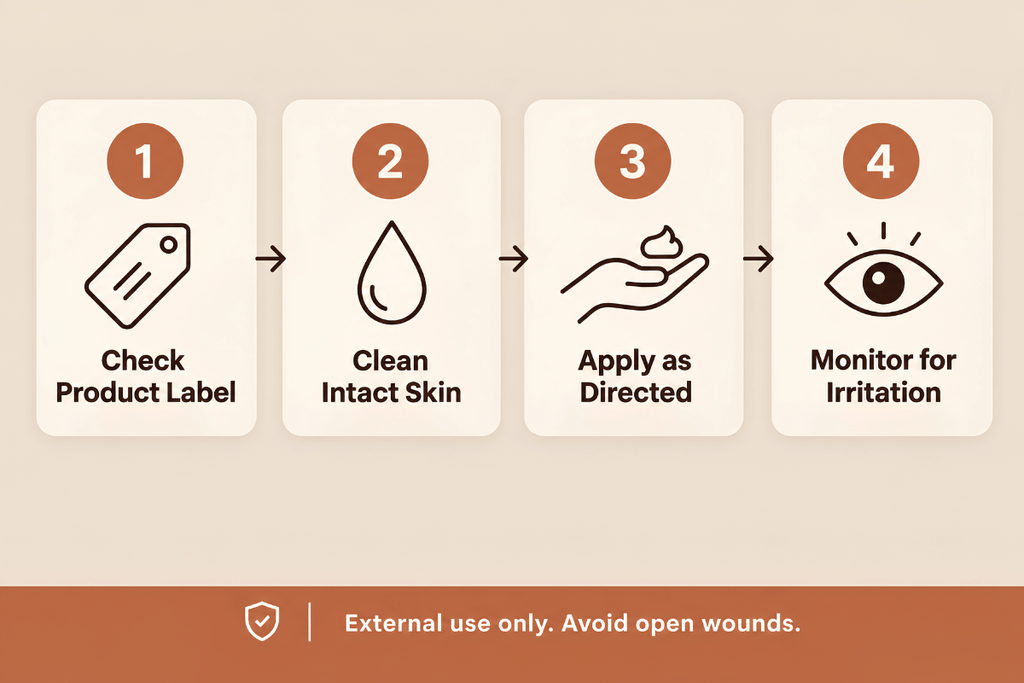
A cautious general approach for an appropriate area of intact skin is:
- Clean the area: Make sure the skin is clean and dry.
- Check the product: Read the label and confirm that the intended use matches your situation.
- Apply a thin layer: Use only the amount directed on the packaging.
- Avoid sensitive areas: Keep the paste away from the eyes, mouth and other sensitive areas.
- Wash your hands: Clean your hands after application, unless the label instructs otherwise.
Do not apply Dashang Lep to open wounds, broken skin or a suspected infection unless a qualified healthcare professional specifically advises you to do so. Do not assume that every Dashang Lep formulation should be left on for the same duration or mixed with ghee, water or oil.
Dashang Lep for Joint Stiffness: What to Know
When considering Dashang Lep for stiffness, first consider what may be causing the discomfort.
Temporary stiffness after activity is different from persistent pain caused by an underlying joint condition. A topical product may be considered for mild symptoms when suitable, but it cannot identify or correct the underlying cause.
Avoid forcing movement through significant pain. If symptoms persist, recur frequently or interfere with normal activities, arrange a medical assessment. Sudden severe pain, major swelling, deformity or inability to use the affected limb needs prompt attention.
Dashang Lep vs Asthi Sandhanak Lep
Both products belong to Kalera Ayurveda’s external Lep category, but they have different product positioning.
Dashang Lep is described for joint stiffness, muscle discomfort and mild sprains or strains.
Asthi Sandhanak Lep is a separate external herbal paste described for bone and joint comfort. You can review the Kalera Asthi Sandhanak Lep product page to compare its stated uses and precautions.
Neither product should be assumed to repair a fracture or replace appropriate care for a serious injury. A suspected fracture requires medical assessment.
Safety and Precautions
Even herbal products intended for external use can cause irritation in some people.
- External use only: Do not swallow Dashang Lep.
- Avoid broken skin: Do not apply it to open cuts, deep wounds or bleeding areas without professional guidance.
- Watch for irritation: Stop using it if burning, redness, itching or a rash develops.
- Avoid sensitive areas: Keep it away from the eyes and mucous membranes.
- Pregnancy and breastfeeding: Ask a qualified healthcare professional before use.
- Children: Seek professional advice before applying it to young children or sensitive skin.
- Serious injuries: Do not rely on a topical paste for suspected fractures, severe sprains or significant swelling.
- Storage: Follow the packaging instructions and do not use the product after its expiry date.
Frequently Asked Questions About Dashang Lep
1. What are the main Dashang Lep Benefits?
Kalera Ayurveda positions Dashang Lep for external support with mild joint stiffness, muscle discomfort, soreness and minor sprains or strains. These are supportive traditional uses, not proof that the product treats or cures a specific disease.
2. Can Dashang Lep be used for joint pain?
It may be considered as an external supportive preparation for mild stiffness or discomfort, following the product instructions. Persistent or severe joint pain needs professional assessment to identify the cause.
3. Is Dashang Lep used for swelling?
Some classical Dashang Lepa formulations have been studied for inflammatory swelling, but evidence from a particular formulation cannot automatically be applied to Kalera’s product. New, severe, spreading or unexplained swelling should be medically assessed.
4. How often should Dashang Lep be applied?
Follow the frequency and duration specified on Kalera’s product packaging or advised by a qualified practitioner. Do not automatically follow another brand’s dosage or application schedule, as formulations may differ.
5. Can Dashang Lep be applied to open wounds?
Do not apply it to open wounds, deep cuts or broken skin unless a qualified healthcare professional specifically advises you to do so. The product is described for external application to support joint and muscle comfort.
6. Is Dashang Lep the same as Asthi Sandhanak Lep?
No. Both are external Ayurvedic pastes, but they are separate products with different descriptions and intended uses. Check each product’s ingredients, label instructions and precautions before deciding which is appropriate.
Final Takeaway
Dashang Lep Benefits centre on its traditional external use for mild joint stiffness, muscle discomfort and soreness associated with everyday activity or minor strains. Kalera Ayurveda describes its product as a supportive joint and muscle care paste, with Dashamoola, aloe vera, turmeric, guggul resin and other herbal materials listed in its product description.
The key is to use the product according to its own label, avoid applying it to broken skin, and seek professional care when symptoms are severe or persistent. Research on classical Dashang Lepa may provide useful context, but it should not be taken as proof that every commercial formulation has the same effects.