

Ayurvedic medicine for constipation is often searched by people who want a gentler approach to occasional hard stools, irregular bowel movements or difficulty passing stool. But choosing the right option is not simply about finding the strongest powder or the product with the longest ingredient list.
Constipation can have different causes and patterns. Diet, low fibre intake, insufficient fluids, lack of physical activity, changes in routine and certain medicines can all contribute. In some cases, constipation can also be associated with an underlying health condition.
Ayurveda has several traditional formulations used to support digestion and bowel regularity. Among the better-known options are Triphala and Panchsakar Churna, but they are not interchangeable. The choice depends on the formulation, the person’s needs and how frequently constipation occurs.
This guide explains the options without treating Ayurvedic products as a universal cure.
What Is Constipation?
Constipation does not necessarily mean that a person must have a bowel movement every day.
Common signs include:
- Fewer bowel movements than usual
- Hard, dry or lumpy stools
- Straining during bowel movements
- Difficulty passing stool
- A feeling that the bowel has not completely emptied
- Abdominal discomfort or bloating
The National Institute of Diabetes and Digestive and Kidney Diseases (NIDDK) notes that constipation may involve fewer than three bowel movements a week, hard stools or difficulty passing stool. Individual bowel patterns can vary.
That distinction is important because the goal should not simply be to force a bowel movement. A better approach is to understand why bowel movements have become irregular and support healthy bowel habits.
Why Does Constipation Happen?
Constipation can develop for several reasons.
Common lifestyle factors
Some of the most common contributors include:
- Eating too little fibre
- Not drinking enough fluids
- Sitting for long periods
- Lack of regular physical activity
- Frequently ignoring the urge to use the toilet
- Changes in diet or daily routine
- Stress
- Certain medicines or supplements
The NHS also lists low fibre intake, inadequate fluids, reduced activity and regularly ignoring the urge to pass stool among common causes.
This is why simply taking an Ayurvedic powder without improving daily habits may not address the bigger picture.
How Ayurveda Approaches Constipation
In Ayurvedic practice, digestive and elimination concerns are traditionally considered in relation to digestion, diet, lifestyle and individual constitution rather than looking at one symptom in isolation.
Different Ayurvedic formulations therefore have different purposes and ingredient combinations.
For someone looking for an Ayurvedic medicine for constipation, the important question is not:
“Which product is strongest?”
A better question is:
“Which type of formulation is appropriate for my particular digestive concern?”
That distinction makes the article more useful than a simple product ranking.
7 Ayurvedic Options and Approaches for Constipation
1. Triphala Churna for Bowel Regularity
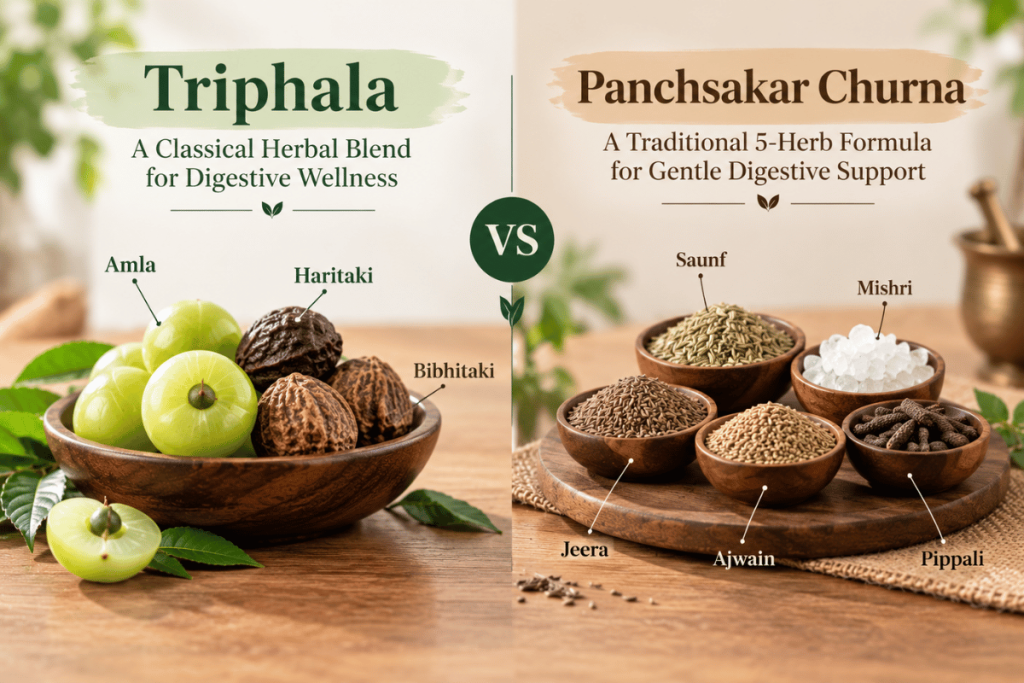
Triphala is one of the best-known Ayurvedic formulations for digestive support. It combines three fruits:
- Amalaki (Amla)
- Haritaki (Harad)
- Bibhitaki (Baheda)
Kalera’s Triphala Churna is made from these three traditional ingredients and the product information describes it as supporting bowel function and relieving constipation.
Triphala can be particularly relevant when someone is looking for a traditional formulation that fits into a broader digestive wellness routine rather than only seeking an occasional strong laxative effect.
Kalera also has a detailed guide on Triphala Churna benefits and uses, but this article focuses specifically on constipation and choosing an appropriate approach.
2. Panchsakar Churna for Digestive Regularity
Panchsakar Churna is another traditional Ayurvedic formulation used for digestive and bowel concerns.
Kalera’s Panchsakar Churna contains five ingredients:
- Senna
- Saindhava Lavana
- Sonth
- Haritaki
- Saunf
The product page describes the formulation as supporting digestion, regular bowel movements and digestive comfort.
Because Panchsakar contains Senna, it should not automatically be treated as something that everyone needs to take every day. Its use and duration should follow the product directions or advice from a qualified practitioner.
Kalera already has a separate article explaining Panchsakar Churna uses and benefits. This new article provides a broader comparison so readers can understand where Panchsakar fits within constipation care.
3. Isabgol as a Fibre-Based Option
Isabgol, also known as psyllium husk, works differently from herbal formulations such as Triphala.
It is a source of soluble fibre that absorbs water and increases stool bulk. This is why fibre-based options are commonly used for constipation.
NIDDK recommends gradually increasing dietary fibre and drinking enough fluids because liquids help fibre work properly.
This also explains why simply increasing fibre without increasing fluids can be uncomfortable for some people.
If you are already taking medicines or have a digestive condition, discuss fibre supplements with a healthcare professional before making major changes.
4. Focus on Hydration
Sometimes the most useful “remedy” is not another product.
Adequate fluid intake helps keep stool softer, particularly when dietary fibre is increased. NIDDK specifically recommends drinking plenty of water and other liquids alongside adequate fibre.
Rather than suddenly increasing several things at once, make changes gradually and observe how your digestion responds.
5. Increase Dietary Fibre Gradually
Fibre-rich foods can play an important role in maintaining regular bowel movements.
Useful sources include:
- Fruits
- Vegetables
- Whole grains
- Lentils and beans
- Nuts and seeds
NIDDK recommends increasing fibre gradually because a sudden increase may cause gas or bloating. Adults generally need around 22–34 grams of fibre per day, depending on age and sex.
For someone with constipation, food habits should therefore be considered alongside any Ayurvedic medicine rather than separately.
6. Build a Regular Toilet Routine
Your daily bathroom routine can also affect bowel regularity.
Try to:
- Go when you feel the urge.
- Avoid repeatedly delaying bowel movements.
- Give yourself enough time instead of rushing.
- Try going around the same time each day.
- Stay relaxed while using the toilet.
NIDDK notes that bowel training at a consistent time can help some people become more regular.
7. Stay Physically Active
Movement matters for digestion too.
Regular physical activity can support bowel regularity and is recommended as part of constipation management. Even a daily walk can be a useful addition to a routine.
This is especially relevant for people whose work involves sitting for most of the day.
Triphala vs Panchsakar Churna: What’s the Difference?
This is one of the most useful comparisons for someone searching for an Ayurvedic medicine for constipation.
| Feature | Triphala Churna | Panchsakar Churna |
|---|---|---|
| Main ingredients | Amla, Harad, Baheda | Senna, Saindhava Lavana, Sonth, Haritaki, Saunf |
| Traditional focus | Digestive support and bowel regularity | Digestive and bowel support |
| Form | Churna | Churna |
| Nature of formulation | Three-fruit Ayurvedic combination | Five-ingredient digestive formulation |
| Best considered for | Broader digestive/bowel routine | Specific bowel-regularity needs |
| Important consideration | Individual tolerance and dosage | Contains Senna, so usage deserves more attention |
This comparison does not mean that one is universally better.
The formulations are different, so they should not be treated as interchangeable products.
For a broader daily digestive routine, Triphala may be the more natural topic to explore. For a formulation specifically containing Senna and traditionally used for bowel regularity, Panchsakar is a different option.
Which Ayurvedic Medicine Is Best for Constipation?
There is no single best Ayurvedic medicine for constipation for every person.
A more sensible approach is to first identify the pattern.
If your main concern is occasional irregularity
Start by looking at:
- Water intake
- Fibre intake
- Physical activity
- Toilet routine
- Recent changes in diet or lifestyle
If you want an Ayurvedic formulation, Triphala is one traditional option commonly considered for digestive and bowel regularity.
If you are specifically looking at a traditional bowel-support formulation
Panchsakar Churna is another option, but because it contains Senna, it should be used according to the product directions or professional advice rather than taken casually for prolonged periods.
If your diet is low in fibre
Increasing fibre gradually and using an appropriate fibre source may be more relevant than immediately choosing a stronger herbal formulation.
Ayurvedic Medicine for Constipation and Gas: Are They the Same?
Constipation and gas often appear together, but they are not exactly the same problem.
A person may experience:
- Hard stool with bloating
- Infrequent bowel movements with gas
- Indigestion after meals
- Abdominal heaviness
- Gas without constipation
The underlying reason can differ from person to person.
For digestive discomfort involving gas and indigestion, Kalera’s Hingwashtak Churna is another digestive-focused formulation that can be explored according to its intended use.
The important point is not to choose a constipation product simply because you also have gas. The dominant symptom and its cause matter.
What Should You Eat When You Have Constipation?
A constipation-friendly diet does not have to be complicated.
Consider adding more:
- Fruits such as pears and apples
- Vegetables
- Whole grains
- Oats
- Lentils
- Beans
- Nuts and seeds
Increase fibre gradually and drink sufficient fluids.
At the same time, reduce your dependence on highly processed, low-fibre foods.
If you suddenly switch from a low-fibre diet to a very high-fibre diet, you may initially experience more gas or bloating. A gradual increase is generally easier to tolerate.
Does Warm Water Help With Constipation?
Warm water is commonly used in traditional routines, and many people find a warm drink comfortable in the morning or around bedtime.
However, it is better not to present warm water as a guaranteed treatment.
The bigger picture is adequate fluid intake throughout the day, along with sufficient fibre, physical activity and a regular bowel routine.
If you are using an Ayurvedic powder with warm water, follow the specific product directions rather than assuming the same quantity or timing applies to every formulation.
Can Constipation Be Managed Only With Ayurvedic Medicine?
Not always.
For occasional constipation related to diet or lifestyle, simple changes may make a significant difference. NIDDK recommends fibre, adequate fluids, physical activity and a regular bowel routine as important parts of prevention and management.
But persistent constipation can have other causes.
Certain medicines, gastrointestinal conditions and other health problems can contribute to constipation.
So an Ayurvedic product should be considered as part of an overall approach rather than as a replacement for proper diagnosis when symptoms continue.
When Should You See a Doctor?
Do not keep trying different constipation remedies indefinitely if the problem is persistent.
Medical advice is particularly important if constipation is accompanied by:
- Blood in the stool
- Rectal bleeding
- Persistent abdominal pain
- Unexplained weight loss
- Sudden changes in bowel habits
- Persistent or recurring bloating
- Significant or ongoing constipation
- Unusual tiredness
NIDDK advises speaking with a doctor when constipation does not improve with self-care or when symptoms such as rectal bleeding or continual abdominal pain occur.
The NHS similarly recommends medical evaluation for persistent constipation, blood in the stool, unexplained weight loss, sudden bowel-habit changes or abdominal pain.
For reliable general guidance, readers can also refer to the NIDDK constipation treatment guidance.
Important Precautions Before Taking an Ayurvedic Medicine for Constipation
Natural does not automatically mean suitable for everyone.
Before starting a new Ayurvedic formulation:
- Read the product directions carefully.
- Do not exceed the recommended amount.
- Consider other medicines or supplements you take.
- Ask a qualified healthcare professional if you have a chronic digestive condition.
- Seek professional advice for persistent constipation.
- Do not use a laxative-type formulation repeatedly without appropriate guidance.
This is especially important with formulations containing ingredients such as Senna.
An Ayurvedic product should be selected according to the formulation and your individual situation—not simply because it appears high in a “best medicine” list.
Why Choosing the Right Formulation Matters
The biggest mistake people make when searching for an Ayurvedic medicine for constipation is assuming that all Ayurvedic digestive powders work in the same way.
They don’t.
Triphala is a three-fruit formulation traditionally used for digestive and bowel support. Panchsakar contains five ingredients, including Senna, and has a different formulation profile. Isabgol works primarily as a fibre-based option.
Understanding these differences makes it easier to make a sensible choice.
For other digestive concerns, Kalera also offers Shivakshar Pachan Churna as a digestive-focused formulation. It should be selected according to its intended use rather than simply being grouped together with constipation remedies.
Frequently Asked Questions
Which is the best Ayurvedic medicine for constipation?
There is no single option that is best for everyone. Triphala and Panchsakar are traditional Ayurvedic formulations used for digestive and bowel concerns, but they have different compositions. The right choice depends on the nature and frequency of constipation, individual tolerance and professional guidance where needed.

Is Triphala good for constipation?
Triphala is traditionally used to support digestion and bowel regularity. Kalera Triphala Churna contains Amla, Harad and Baheda and is described on its product page as supporting bowel function and constipation relief.
Is Panchsakar Churna used for constipation?
Yes. Panchsakar Churna is a traditional Ayurvedic formulation used for digestive and bowel regularity. Kalera’s formulation contains Senna, Saindhava Lavana, Sonth, Haritaki and Saunf.
Can I take Triphala and Panchsakar together?
Do not combine them simply because both are associated with constipation. Their formulations are different, and Panchsakar contains Senna. If you are considering using both, ask a qualified Ayurvedic practitioner or healthcare professional about whether that combination is appropriate for you.
What should I drink for constipation?
Adequate fluid intake is important, particularly when increasing fibre. Water and other suitable fluids can help fibre work properly and can help keep stools softer.
How can I relieve constipation naturally?
Start with the basics: gradually increase dietary fibre, drink enough fluids, stay physically active, avoid repeatedly ignoring the urge to use the toilet and maintain a regular bathroom routine.
Is Ayurvedic medicine safe for daily constipation?
Safety depends on the specific formulation, ingredients, dosage and the individual. A product containing Senna, for example, should not be treated as an everyday solution without appropriate guidance. Persistent constipation should also be evaluated rather than managed indefinitely through self-medication.
Can constipation cause gas and bloating?
Yes, constipation can occur alongside abdominal discomfort and bloating. However, gas and bloating can have many other causes as well. If these symptoms are persistent or severe, professional evaluation is appropriate.
When should constipation be taken seriously?
Seek medical advice if constipation persists despite self-care or if you have blood in the stool, rectal bleeding, ongoing abdominal pain, unexplained weight loss or sudden changes in bowel habits.
Final Thoughts
Finding the right Ayurvedic medicine for constipation is less about choosing the strongest remedy and more about understanding what your digestive system actually needs.
For some people, improving fibre, fluids, movement and toilet habits may be enough. For others, a traditional formulation such as Triphala Churna may fit into a broader digestive routine. Panchsakar Churna is another traditional option, but its formulation is different and includes Senna, so it deserves more careful use.
The most sensible approach is to combine appropriate Ayurvedic guidance with practical lifestyle habits and not ignore constipation that is persistent, severe or accompanied by warning signs.