

“Gastric problem” is a common phrase in everyday conversation. One person may use it for gas and bloating, another for acidity or burning, while someone else may mean heaviness and indigestion after meals.
That is why searching for the best Ayurvedic medicine for gastric does not always lead to one simple answer.
The first step is to understand what you are actually experiencing. Gas, bloating, acidity and indigestion can overlap, but they are not identical. For example, indigestion can involve upper-abdominal discomfort, early fullness, bloating, nausea or belching, while gas commonly causes bloating, belching or passing gas.
Ayurveda has several traditional formulations used for digestive concerns. However, the right formulation depends on the symptoms, the ingredients, the way the product is intended to be used and your individual needs.
This guide takes a practical approach rather than simply listing a collection of products.
What Does “Gastric Problem” Actually Mean?
“Gastric” is not a specific medical diagnosis.
People commonly use the term to describe symptoms such as:
- Gas or frequent burping
- Abdominal bloating
- Acidity or a burning sensation
- Indigestion
- Heaviness after meals
- Abdominal discomfort
- Feeling unusually full after eating
- Reduced appetite
Indigestion, medically called dyspepsia, is itself a group of gastrointestinal symptoms rather than one single disease. It can include upper-abdominal pain or burning, uncomfortable fullness, bloating, nausea and belching.
So before choosing an Ayurvedic medicine for gastric problems, it helps to identify the dominant symptom.
Gas, Acidity and Indigestion: What’s the Difference?
These terms are often used together, but there are useful differences.
| Concern | What you may notice | Common description |
|---|---|---|
| Gas | Burping, passing gas, bloating | “Pet mein gas hai” |
| Bloating | Fullness or swelling in the abdomen | Stomach feels tight or heavy |
| Acidity | Burning or sour feeling, sometimes heartburn | “Jalan ho rahi hai” |
| Indigestion | Upper-abdominal discomfort, early fullness, nausea or belching | “Khana hazam nahi hua” |
| Heaviness | Feeling full or uncomfortable after meals | “Pet bhaari lag raha hai” |
Gas is normal to some extent. NIDDK notes that gas symptoms can become a concern when they occur frequently, are bothersome or affect daily activities.
This distinction matters because a formulation traditionally used for gas and digestive discomfort may not be the appropriate choice for someone experiencing persistent reflux-like symptoms.

Why Do Gas and Gastric Problems Happen?
There can be many reasons.
Eating too quickly
Eating quickly can increase the amount of air swallowed, which may contribute to burping and gas.
Fizzy drinks
Carbonated beverages can increase gas symptoms for some people. NIDDK recommends limiting fizzy drinks when they contribute to gas problems.
Heavy or high-fat meals
Large or greasy meals may make some people feel bloated or uncomfortable after eating.
Irregular eating habits
Long gaps followed by very heavy meals can make digestive discomfort more noticeable in some people.
Certain foods
Gas symptoms can vary considerably from person to person. Foods containing certain carbohydrates, dairy products in people with lactose intolerance, legumes and some vegetables can contribute to gas in susceptible individuals.
Stress and lifestyle
Digestive symptoms can also be influenced by stress and the gut-brain connection. Chronic indigestion, for example, can be associated with functional dyspepsia.
Underlying digestive conditions
Persistent gas or indigestion can sometimes occur alongside conditions such as IBS, constipation, reflux, lactose intolerance or other gastrointestinal disorders.
This is why recurring symptoms should not automatically be treated as “normal gas.”
How Ayurveda Looks at Digestive Discomfort
Traditional Ayurveda places considerable emphasis on digestion and the quality of digestive function.
Ayurvedic formulations for digestive concerns commonly use herbs and spices such as:
- Hing
- Ajwain
- Saunth
- Pippali
- Black pepper
- Jeera
- Haritaki
- Rock salt
Different combinations are traditionally used for different digestive concerns.
For example, formulations containing warming digestive herbs and spices are commonly positioned for gas, bloating and sluggish digestion, while other formulations are used when acidity or bowel irregularity is the more prominent concern.
The important point is that one Ayurvedic formulation does not automatically suit every gastric symptom.
7 Ayurvedic Options for Gastric and Digestive Problems
1. Gasher Vati for Digestive Comfort
If gas, bloating and general digestive discomfort are your main concerns, Gasher Vati is one Kalera formulation worth considering within an Ayurvedic digestive routine.
Kalera’s Gasher Vati contains traditional ingredients including Ajwain, Haritaki, Jeera, Black Pepper, Kala Namak, Hing and Neembu Sat, along with other ingredients listed on the product page. It is positioned as a traditional Ayurvedic formulation for digestive comfort.
You can explore the Kalera Gasher Vati product page for its current formulation and usage information.
It is important to follow the product label rather than assuming the dosage of one digestive formulation applies to another.
2. Hingwashtak Churna for Gas and Indigestion
Hingwashtak Churna is another traditional digestive formulation, especially relevant when gas, bloating and indigestion are the main concerns.
Kalera’s formulation contains ingredients such as:
- Hing
- Saunth
- Black pepper
- Pippali
- Ajwain
- White cumin
- Black cumin
- Kalonji
- Rock salt
The product page describes it as supporting digestion and addressing concerns such as gas, bloating, acidity and indigestion.
If you want a powdered Ayurvedic formulation rather than a tablet, you can see the Kalera Hingwashtak Churna details.
3. Avipattikar Churna for Acidity-Focused Concerns
When burning, acidity or acid-related discomfort is more prominent than gas, a different formulation may be more appropriate.
Kalera’s Avipattikar Churna contains a combination including Amla, Haritaki, Bibhitaki, Ginger, Black Pepper, Pippali, Cardamom, Clove and other traditional ingredients.
This is an important distinction: gas and acidity may occur together, but they are not the same symptom.
Competitor digestive-care pages also separate formulations for gas/indigestion from those positioned for hyperacidity. Baidyanath, for example, places Hingwashtak Churna under gas and indigestion while positioning Avipattikar Churna for hyperacidity and indigestion.
4. Shivakshar Pachan Churna for Digestive Support
Another option is Shivakshar Pachan Churna, which contains ingredients including Saindhava, Jeera, Krishna Jeera, Hing, Haritaki and Sarjakshara.
Kalera describes it as supporting digestion, appetite and regular bowel movements, while also helping with bloating and gas.
This makes it more relevant to people whose gastric discomfort is connected with sluggish digestion or bloating rather than isolated acidity.
5. Lavan Bhaskar Churna for a Broader Digestive Routine
Lavan Bhaskar Churna is another traditional digestive formulation available from Kalera.
The formulation contains a range of herbs and salts including rock salt, black salt, cumin, Pippali, black pepper, dry ginger, Hing and other ingredients. Kalera’s existing guide discusses its traditional use for digestive discomfort, gas, bloating and appetite.
It can therefore be considered as part of a broader digestive-care discussion rather than presented as a universal answer to every gastric complaint.
6. Triphala for Digestive and Bowel Regularity
Triphala is better known as a three-fruit Ayurvedic formulation made from Amalaki, Haritaki and Bibhitaki.
It may be relevant when digestive discomfort occurs alongside irregular bowel movements or constipation, but it should not automatically be treated as a gas medicine.
Kalera’s Triphala Churna is therefore a useful internal link for readers whose gastric complaints are connected with bowel irregularity.
7. Food and Routine Changes
Sometimes the most useful step is not adding another product.
Eating slowly, reducing fizzy drinks, avoiding very large meals and identifying foods that repeatedly trigger symptoms can make a noticeable difference.
NIDDK recommends eating more slowly and changing eating and drinking habits as part of managing troublesome gas symptoms.
That makes lifestyle management an important part of any Ayurvedic digestive routine.
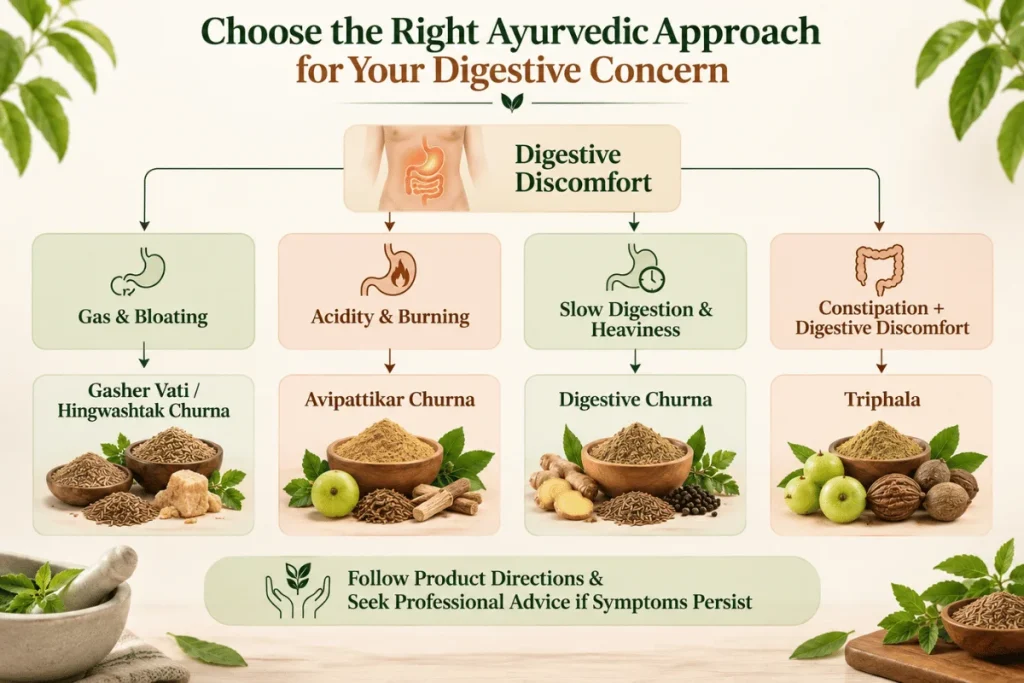
How to Choose an Ayurvedic Medicine for Gastric Problems
Instead of asking only “Which is the best Ayurvedic medicine for gastric?”, ask what your main symptom actually is.
If gas and bloating are the main problem
A traditional digestive formulation such as Gasher Vati or Hingwashtak Churna may be more relevant.
If acidity or burning is the main concern
Look at formulations traditionally used for acidity, such as Avipattikar Churna, while also paying attention to diet and possible reflux triggers.
If digestion feels slow or meals feel heavy
A digestive formulation containing ingredients such as Hing, Ajwain, Jeera, ginger and Pippali may be considered according to its intended use.
If constipation is happening along with gastric discomfort
The focus should include bowel regularity rather than only gas. Triphala may be relevant as part of a broader digestive routine.
This approach is more useful than ranking products from “best” to “worst.”
Gasher Vati vs Hingwashtak Churna: Which One Should You Choose?
Both are relevant to digestive discomfort, but their formulations are different.
| Feature | Gasher Vati | Hingwashtak Churna |
|---|---|---|
| Form | Tablet | Powder |
| Key ingredients include | Ajwain, Haritaki, Jeera, Black Pepper, Hing | Hing, Ajwain, Ginger, Pippali, Black Pepper, Cumin |
| Main positioning | Digestive comfort | Gas, bloating and indigestion |
| Convenient format | Tablet | Churna |
| Best approach | Follow product directions | Follow product directions |
Kalera describes Gasher Vati as a traditional tablet for digestive comfort, while its Hingwashtak Churna is positioned around gas, bloating, acidity and indigestion.
Neither should be labelled universally “better.” The formulation and the person’s symptoms are more important.
What to Eat When You Have Gastric Problems
There is no single diet that works for every person with gas or indigestion.
Start by identifying your own triggers.
Some people notice more symptoms after:
- Very large meals
- Fried or greasy foods
- Fizzy drinks
- Excess caffeine
- Certain dairy products
- Certain legumes
- Foods that personally trigger bloating
NIDDK notes that food triggers can vary between individuals and recommends discussing persistent symptoms with a healthcare professional or dietitian when needed.
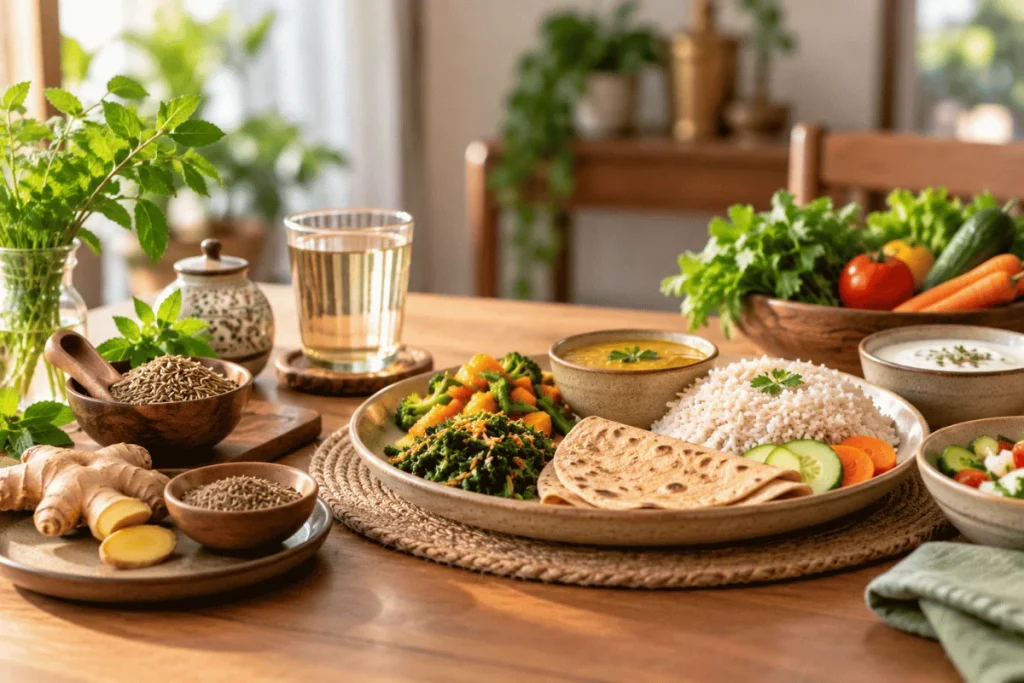
Simple eating habits that may help
Try to:
- Eat slowly.
- Chew food properly.
- Avoid eating while rushing.
- Keep portions moderate.
- Avoid unnecessary fizzy drinks.
- Notice which foods repeatedly trigger symptoms.
- Avoid lying down immediately after a very heavy meal if it worsens your symptoms.
- Keep a food-and-symptom diary if the trigger is unclear.
Ayurvedic Medicine for Gastric and Acidity: Are They the Same?
No.
This is one of the most important points to understand.
Gas generally involves symptoms such as belching, passing gas and bloating.
Acidity usually refers to acid-related discomfort, burning or reflux-type symptoms.
Indigestion can include upper-abdominal discomfort, early fullness, nausea, bloating or belching.
These symptoms can overlap, but they can also have different underlying causes. NIDDK specifically notes that indigestion and heartburn are separate conditions, even though they may occur together.
So if someone repeatedly experiences burning or reflux, simply taking a product intended for gas may not address the actual problem.
Can Lifestyle Changes Reduce Gastric Problems?
Yes, lifestyle habits can be an important part of managing digestive symptoms.
A practical daily routine can include:
Eat slowly → choose moderate portions → identify trigger foods → stay physically active → maintain regular meals → monitor recurring symptoms.
For gas, NIDDK also recommends reducing behaviours that increase swallowed air, such as chewing gum, drinking through straws and consuming fizzy drinks.
These simple changes can be more useful when combined consistently rather than trying multiple remedies at the same time.
How Should Ayurvedic Digestive Products Be Used?
Different formulations have different directions.
Do not assume that because two products are both Ayurvedic churnas or tablets, they have the same dosage or timing.
For example, Kalera’s Hingwashtak Churna product page gives its own directions, while Gasher Vati specifically instructs users to follow the label or advice of an Ayurvedic expert.
A sensible approach is:
- Read the product label.
- Follow the recommended amount.
- Do not combine several digestive formulations casually.
- Consider other medicines or supplements you are taking.
- Ask a qualified professional if you have an existing digestive condition.
- Stop self-treating persistent or worsening symptoms and seek medical advice.
When Is Gastric Discomfort a Reason to See a Doctor?
Occasional gas or indigestion is common. Persistent or changing symptoms deserve more attention.
Talk to a doctor if your symptoms:
- Keep returning
- Suddenly become much worse
- Interfere with daily life
- Occur with unexplained weight loss
- Are associated with persistent abdominal pain
- Occur with ongoing vomiting
- Are accompanied by difficulty swallowing
- Include blood in vomit or stool
- Are associated with black, tar-like stools
NIDDK recommends medical evaluation when indigestion does not improve and identifies symptoms such as severe constant abdominal pain, frequent vomiting, difficulty swallowing, unexplained weight loss and black stools as warning signs.
Similarly, frequent or changing gas symptoms accompanied by abdominal pain, constipation, diarrhoea or weight loss should be discussed with a doctor.
For general medical information, readers can refer to the NIDDK guide on indigestion.
A Simple Daily Routine for Better Digestive Comfort
You do not necessarily need a complicated routine.
Morning
Start your day with adequate fluids and avoid rushing through breakfast.
During meals
Eat slowly and chew properly. Try not to eat while constantly talking or moving around, as swallowing more air can contribute to gas.
After meals
A short, comfortable walk can be a practical addition to a healthy daily routine.
Throughout the day
Notice which foods trigger symptoms. If you experience repeated bloating, keeping a simple food diary can help identify patterns.
If using an Ayurvedic formulation
Use only the formulation appropriate to your concern and follow its specific directions.
Why One “Best” Ayurvedic Medicine for Gastric Problems Does Not Exist
The phrase best Ayurvedic medicine for gastric sounds simple, but gastric discomfort is not one single condition.
Someone with occasional gas may have a very different problem from someone experiencing repeated burning, reflux or chronic indigestion.
That is why the better approach is to match the formulation with the symptom:
- Gas and bloating: consider traditional digestive formulations such as Gasher Vati or Hingwashtak Churna.
- Acidity-focused discomfort: consider an acidity-oriented formulation such as Avipattikar Churna.
- Sluggish digestion and heaviness: digestive formulations containing traditional warming herbs may be relevant.
- Constipation with digestive discomfort: Triphala may be worth considering as part of a broader bowel-support routine.
Kalera offers several of these formulations, making it possible to build the article around different digestive concerns rather than one exaggerated “best medicine” claim.
Frequently Asked Questions
Which is the best Ayurvedic medicine for gastric problems?
There is no single best option for everyone. The right choice depends on whether the main concern is gas, bloating, acidity, indigestion or constipation. Traditional formulations such as Gasher Vati, Hingwashtak Churna and Avipattikar Churna have different formulations and intended digestive uses.
Which Ayurvedic medicine is good for gas?
Gasher Vati and Hingwashtak Churna are two Kalera formulations positioned around digestive comfort and gas-related concerns. Gasher Vati contains ingredients such as Ajwain, Haritaki, Jeera, Black Pepper and Hing, while Hingwashtak Churna contains Hing, Ajwain, Ginger, Pippali and other digestive herbs.
What is the Ayurvedic medicine for acidity?
An acidity-focused Ayurvedic formulation such as Avipattikar Churna may be considered according to its intended use. However, recurring acidity or heartburn should not simply be self-treated indefinitely because persistent symptoms can have different causes.
Can gas and acidity happen together?
Yes. Gas, bloating and acidity can occur together, but they are not the same symptom. The appropriate approach depends on which symptoms are dominant and why they are occurring.
Is Hingwashtak Churna good for gastric problems?
Hingwashtak Churna is traditionally used for digestive concerns such as gas, bloating and indigestion. Kalera’s formulation includes Hing, Ajwain, ginger, Pippali, black pepper and cumin among its ingredients.
Is Gasher Vati suitable for digestive discomfort?
Kalera describes Gasher Vati as a traditional Ayurvedic tablet intended to support digestive comfort. Its listed ingredients include Ajwain, Haritaki, Jeera, Black Pepper, Kala Namak and Hing, among others.
What foods should I avoid during gastric problems?
There is no universal list because food triggers vary. Fizzy drinks, large or greasy meals and certain foods that personally trigger gas or indigestion may worsen symptoms. Keeping track of your own triggers can be more useful than following a very restrictive diet.
How can I reduce gas naturally?
Eat slowly, avoid unnecessary fizzy drinks, limit habits that cause you to swallow excess air, and identify foods that repeatedly trigger symptoms. Regular physical activity and balanced eating habits can also support digestive wellness.
Can Ayurvedic medicine permanently cure gastric problems?
It would be inappropriate to promise a permanent cure because “gastric problems” can have many causes. If symptoms keep returning, the underlying cause should be identified rather than relying indefinitely on self-treatment.
When should I see a doctor for gastric problems?
Seek medical advice if symptoms are persistent, suddenly change or occur with warning signs such as severe abdominal pain, repeated vomiting, difficulty swallowing, unexplained weight loss, bleeding or black stools.
Final Thoughts
Finding the right Ayurvedic medicine for gastric problems starts with understanding the problem rather than choosing a product at random.
Gas, bloating, acidity and indigestion can feel similar, but they are not identical. Traditional Ayurvedic formulations such as Gasher Vati, Hingwashtak Churna and Avipattikar Churna have different ingredient profiles and are positioned for different digestive concerns.
Along with an appropriate formulation, simple habits such as eating slowly, avoiding personal food triggers, staying active and maintaining sensible meal patterns can make your digestive routine more sustainable.
And if gastric symptoms become persistent, severe or unusual, it is better to find the underlying cause than continue changing digestive products.