
What Is Harad Pak?
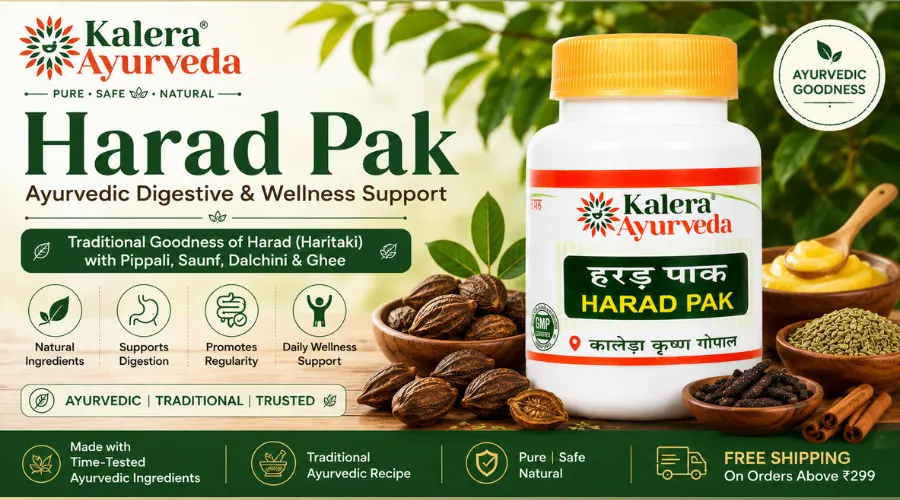
Harad Pak is a traditional Ayurvedic preparation made with Harad, also known as Haritaki or Terminalia chebula, along with other ingredients used in Ayurvedic formulations. Kalera Ayurveda Harad Pak combines Harad with Pippali, Saunf, Dalchini, ghee, and sugar to create a traditional Pak-Avleh preparation that can be included as part of a balanced wellness routine.
Harad has an important place in Ayurveda and is also widely known by names such as Haritaki and Chebulic Myrobalan. It is one of the three fruits traditionally used in Triphala. Indian medicinal-plant references identify Harad as Terminalia chebula and document its long-standing traditional use in Ayurveda.
Modern research has also examined the phytochemical profile of Terminalia chebula, including compounds such as chebulagic acid, chebulinic acid, gallic acid, ellagic acid, and other tannins and polyphenols. Research has investigated several possible biological activities of Haritaki, but these findings should not be treated as proof that a particular Harad Pak product can prevent or treat a disease.
What Is Harad or Haritaki?
Harad is the common Indian name for Haritaki, the fruit of Terminalia chebula. It is also called Chebulic Myrobalan in English. The fruit has been used in traditional Indian systems of medicine for a long time and is particularly well known as one of the three ingredients of Triphala.
Haritaki is often associated with traditional Ayurvedic approaches to digestion and regular elimination. Modern product information for Haritaki preparations commonly focuses on digestive comfort, healthy bowel movements, and general wellness.
However, Harad Pak is different from plain Harad powder because it combines Harad with several other ingredients. The final formulation, preparation method, quantity of each ingredient, and recommended serving should therefore be considered when choosing a Harad-based product.
Ingredients of Kalera Ayurveda Harad Pak
Kalera Ayurveda Harad Pak contains a combination of traditional ingredients rather than only Harad. According to the product information provided by Kalera Ayurveda, the formulation includes Harad, sugar, ghee, Pippali, Saunf, and Dalchini.
Each ingredient has its own traditional role and characteristics.
Harad (Terminalia chebula)
Harad is the primary herbal ingredient in this formulation. Also known as Haritaki, it is one of the most recognized Ayurvedic herbs and one of the three fruits used in Triphala. Traditional references associate Haritaki with digestive support and regular elimination.
Pippali
Pippali, commonly known as long pepper, is another traditional Ayurvedic ingredient. It is used in many Ayurvedic formulations and is traditionally associated with digestion and the proper functioning of the digestive system.
Its inclusion in Harad Pak adds another traditional herb to the formulation rather than relying on Harad alone.
Saunf
Saunf, or fennel, is commonly used in Indian food and traditional wellness practices. It has a naturally aromatic taste and is often associated with digestive comfort.
Its pleasant flavor also complements the stronger taste of Harad and other herbs used in traditional preparations.
Dalchini
Dalchini, or cinnamon, is an aromatic spice commonly used in traditional Indian preparations. It has a naturally warm and distinctive flavor and is included in many traditional herbal formulations.
In Harad Pak, Dalchini contributes to the overall taste and ingredient profile of the preparation.
Ghee
Ghee is a traditional ingredient used in many Ayurvedic preparations. It provides a nourishing base and is commonly used when preparing different types of Pak and Avaleha formulations.
Sugar
Sugar is included as part of the Harad Pak formulation and contributes sweetness to balance the naturally strong and astringent taste of Harad and other herbs.
What Are the Traditional Uses of Harad Pak?
Harad Pak is primarily relevant to people looking for an Ayurvedic preparation containing Harad and other traditional herbs. Harad itself has a long history of traditional use, particularly in formulations associated with digestion and bowel regularity.
Modern Haritaki product descriptions also commonly mention digestive support, healthy bowel movements, and occasional digestive discomfort as areas of interest.
Because Harad Pak is a specific multi-ingredient formulation, it is better to consider it as part of a broader wellness routine rather than expecting it to provide a guaranteed result for a particular health condition.
Some traditional uses and wellness areas associated with Harad-based preparations include:
- Supporting normal digestion as part of a balanced routine
- Supporting healthy bowel regularity
- Including Haritaki in traditional Ayurvedic wellness practices
- Complementing a balanced diet and lifestyle
- Providing a traditional herbal preparation containing Harad and supportive spices
Harad Pak and Digestive Wellness
Digestive wellness is one of the most common areas associated with Harad and Haritaki preparations. Haritaki has traditionally been used in Ayurveda in formulations related to digestion and elimination, while modern product descriptions frequently position Haritaki around digestive comfort and healthy bowel movements.
Kalera Ayurveda Harad Pak combines Harad with Pippali, Saunf, and Dalchini. These ingredients are traditionally used in different Ayurvedic and culinary preparations and give the product a broader herbal profile.
A healthy digestive routine also depends on everyday habits such as eating a balanced diet, drinking enough fluids, maintaining physical activity, and following regular meal patterns. An Ayurvedic product should be considered as one part of this overall routine rather than a replacement for healthy lifestyle habits.
How to Take Harad Pak?
The Kalera Ayurveda product information recommends 1–2 teaspoons twice daily or as recommended. It also states that Harad Pak can be taken with warm milk if preferred.
Since individual needs can differ, users should follow the product label and seek advice from a qualified Ayurvedic practitioner or healthcare professional when they are unsure about the appropriate serving.
When using an herbal preparation, consistency with the recommended serving is more appropriate than increasing the quantity in the expectation of faster results. Do not exceed the recommended amount on the product label.
When Should You Take Harad Pak?
There is no single timing that is suitable for every person. The appropriate timing can depend on the product instructions, individual routine, dietary habits, and professional advice.
Kalera Ayurveda recommends taking Harad Pak twice daily according to the product directions. If you have questions about timing, serving size, or whether the product is appropriate for your routine, a qualified practitioner can provide more suitable guidance.
The most important point is to follow the manufacturer’s instructions rather than changing the serving according to assumptions about Harad or Haritaki powder.
Harad Pak vs Harad Powder
Harad powder and Harad Pak are not exactly the same type of product.
Harad powder generally contains powdered Harad or Haritaki, while Harad Pak is a prepared formulation containing Harad along with other ingredients. Kalera Ayurveda Harad Pak contains Harad, Pippali, Saunf, Dalchini, ghee, and sugar.
The choice between the two depends on what type of preparation a person is looking for. People who specifically want plain Haritaki may prefer a single-ingredient powder, while someone looking for a traditional multi-ingredient Pak preparation may consider Harad Pak.
It is therefore useful to check the complete ingredient list, serving instructions, pack size, and product information before choosing a Harad-based preparation.
Why Choose Kalera Ayurveda Harad Pak?
Kalera Ayurveda Harad Pak is prepared as a traditional Ayurvedic Pak-Avleh formulation using Harad and other familiar ingredients. The product is available in a 50 gm pack and is listed by Kalera Ayurveda at ₹80.
The formulation includes Harad along with Pippali, Saunf, Dalchini, ghee, and sugar, giving it a broader ingredient profile than a plain Harad powder.
For people specifically looking for a Harad Pak containing Terminalia chebula and traditional supporting ingredients, checking the formulation and usage instructions can help them decide whether it fits their wellness routine.
How to Store Harad Pak?
Proper storage helps maintain the quality of a herbal preparation. Kalera Ayurveda recommends storing Harad Pak in a cool, dry place and keeping it away from direct sunlight.
Keep the container properly closed when not in use and avoid introducing moisture or water into the product. It is also important to check the manufacturing and expiry information printed on the packaging.
Following the storage instructions provided by the manufacturer is preferable to transferring the product into another container without a specific reason.
Precautions Before Using Harad Pak
Harad and Haritaki are traditional Ayurvedic ingredients, but natural ingredients are not automatically suitable for everyone. Different people can respond differently to herbal products, and individual circumstances can affect whether a product is appropriate.
People who are pregnant or breastfeeding, taking regular medicines, managing a health condition, or considering an herbal product for a child should speak with a qualified healthcare professional or Ayurvedic practitioner before use.
Always read the product label carefully, follow the recommended serving, and avoid using more than the stated amount. If you experience an unexpected reaction after consuming an herbal product, stop using it and seek appropriate professional advice.
Frequently Asked Questions
What is Harad Pak?
Harad Pak is a traditional Ayurvedic preparation made with Harad or Haritaki (Terminalia chebula) and other ingredients. Kalera Ayurveda Harad Pak contains Harad, Pippali, Saunf, Dalchini, ghee, and sugar.
What is Harad called in Ayurveda?
Harad is commonly known as Haritaki in Ayurveda and is botanically identified as Terminalia chebula. It is also known as Chebulic Myrobalan and is one of the three fruits used in Triphala.
What are the traditional benefits of Harad?
Harad has traditionally been associated with digestive wellness and healthy elimination. Modern research has also studied its phytochemicals and possible biological activities, but research findings should not be treated as guaranteed health benefits of a specific Harad Pak product.
Is Harad Pak the same as Harad powder?
No. Harad powder generally refers to powdered Haritaki, while Harad Pak is a multi-ingredient preparation. Kalera Ayurveda Harad Pak contains Harad along with Pippali, Saunf, Dalchini, ghee, and sugar.
How should Kalera Ayurveda Harad Pak be taken?
The product information recommends 1–2 teaspoons twice daily or as recommended. It can also be taken with warm milk if preferred. Users should follow the product label or advice from a qualified practitioner.
Can Harad Pak be taken every day?
Daily use should follow the product’s recommended serving and individual suitability. If you have a health condition, take medicines, are pregnant or breastfeeding, or have concerns about regular use, consult a qualified healthcare professional or Ayurvedic practitioner.
What ingredients are present in Kalera Ayurveda Harad Pak?
The listed ingredients include Harad, sugar, ghee, Pippali, Saunf, and Dalchini. Harad is also known as Haritaki or Terminalia chebula.
How should Harad Pak be stored?
Store Harad Pak in a cool, dry place away from direct sunlight and keep the container properly closed. Follow the storage instructions provided on the product packaging.
Final Thoughts
Harad Pak is a traditional Ayurvedic preparation centered around Harad or Haritaki, an herb with a long history of use in Ayurveda. Kalera Ayurveda combines Harad with Pippali, Saunf, Dalchini, ghee, and sugar to create a multi-ingredient Pak-Avleh preparation.
Harad is widely associated with traditional digestive and elimination practices, while modern research continues to study the phytochemicals and biological properties of Terminalia chebula.
For anyone considering Harad Pak as part of a wellness routine, understanding the ingredients, recommended serving, storage instructions, and individual suitability is important. A balanced diet, regular lifestyle, and appropriate professional guidance should remain part of responsible wellness practices.