
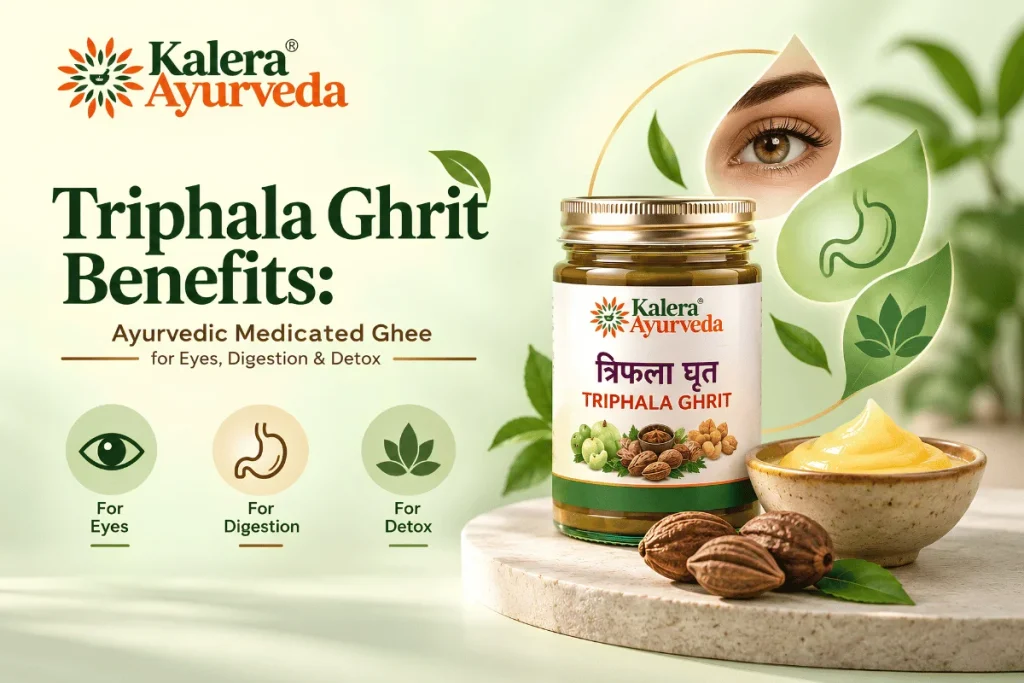
What Is Triphala Ghrit?
Triphala Ghrit, also known as Triphala Ghrita, is a traditional Ayurvedic medicated ghee prepared using Triphala and ghee, along with other herbs depending on the formulation. Triphala itself combines three fruits: Amalaki (Amla), Haritaki (Harad), and Bibhitaki (Baheda).
The combination of Triphala with ghee gives the formulation a different character from ordinary Triphala powder. In Ayurveda, ghee is traditionally used as a nourishing base for herbal preparations, while Triphala is widely associated with digestive regularity, cleansing and rejuvenative routines. Classical and modern reviews of Triphala have mainly explored its digestive and broader traditional applications, although more high-quality human research is still needed.
At Kalera Ayurveda, Triphala Ghrit combines Triphala with ghee and additional ingredients including Ashwagandha, Mulethi and Pippali. The product is positioned as a traditional Ayurvedic formulation to complement digestive health, regularity and a balanced wellness routine.
7 Key Triphala Ghrit Benefits
The traditional uses of Triphala Ghrit are broader than simply supporting digestion. Its ingredients and ghee-based preparation make it suitable for several Ayurvedic wellness routines.
1. Supports Traditional Eye Wellness
Eye wellness is one of the most commonly associated traditional uses of Triphala Ghrita. Triphala has a long history of Ayurvedic use in eye-care practices, and Triphala-based preparations have been investigated in limited clinical research.
The nourishing nature of ghee is also traditionally valued in formulations intended to support tissues and dryness-related concerns.
However, this should not be interpreted as a treatment for cataracts, glaucoma, infections, severe dry eye or other diagnosed eye diseases. If you have persistent eye pain, redness, blurred vision or changes in eyesight, proper eye examination should come first.
2. Promotes Healthy Digestion
Digestive support is another important reason people consider Triphala-based formulations.
Triphala contains Amalaki, Haritaki and Bibhitaki, three fruits traditionally used to support digestion and bowel regularity. Research reviews suggest that Triphala has potential gastrointestinal applications, although evidence varies by formulation and condition.
Kalera’s Triphala Ghrit is specifically positioned for digestive support and regularity, making it relevant for people who want to include an Ayurvedic formulation within a broader digestive wellness routine.
For another Triphala-based option, you can also explore Kalera Triphala Churna.
3. Supports Bowel Regularity
Irregular bowel movements are often connected with dietary habits, low fibre intake, inadequate fluids, sedentary routines and other lifestyle factors.
Triphala is traditionally used to support bowel regularity. Some research has also explored its mild laxative and gastrointestinal effects, although clinical evidence is not strong enough to treat every digestive condition with Triphala alone.
Triphala Ghrit may therefore be considered as part of an Ayurvedic approach to digestive regularity rather than as a quick solution for chronic constipation.
4. Complements Ayurvedic Cleansing Routines
“Detox” is a common term used when discussing Triphala products, but it is important to understand what this means in context.
In Ayurveda, Triphala is traditionally associated with cleansing and rejuvenative routines. This is different from claiming that a product literally removes unspecified toxins from the body.
A balanced Ayurvedic cleansing approach usually works alongside appropriate food choices, hydration, sleep, physical activity and digestive habits. Triphala Ghrit can be viewed as one component of such a traditional wellness routine. Kalera itself categorizes the product around cleansing and detox-oriented wellness.
5. Supports Overall Rejuvenative Wellness
Triphala is traditionally described as a Rasayana, meaning a rejuvenative Ayurvedic approach intended to support long-term wellness.
When combined with ghee and other herbs, Triphala Ghrit can fit into a broader routine focused on nourishment, digestion and maintaining balance.
This does not mean that Triphala Ghrit can prevent ageing or cure chronic disease. Rather, its traditional role is better understood as supportive wellness within the Ayurvedic framework.
6. Provides a Ghee-Based Herbal Formulation
One important difference between Triphala Ghrit and ordinary Triphala powder is the ghee base.
Ghee has a long history in Ayurvedic formulations and is traditionally used as a carrier for herbs. Kalera’s formulation combines ghee with Triphala and additional herbs such as Ashwagandha, Mulethi and Pippali.
This makes Triphala Ghrit a distinct formulation rather than simply Triphala powder mixed with fat at home.
7. Complements a Balanced Ayurvedic Routine
The most practical way to think about Triphala Ghrit is as part of a larger wellness routine.
Good digestion, regular bowel habits, adequate sleep, nutritious food and daily movement all contribute to overall health. A traditional formulation such as Triphala Ghrit can complement these habits, but it should not replace them.
This approach is also more realistic than expecting one Ayurvedic product to address every health concern.
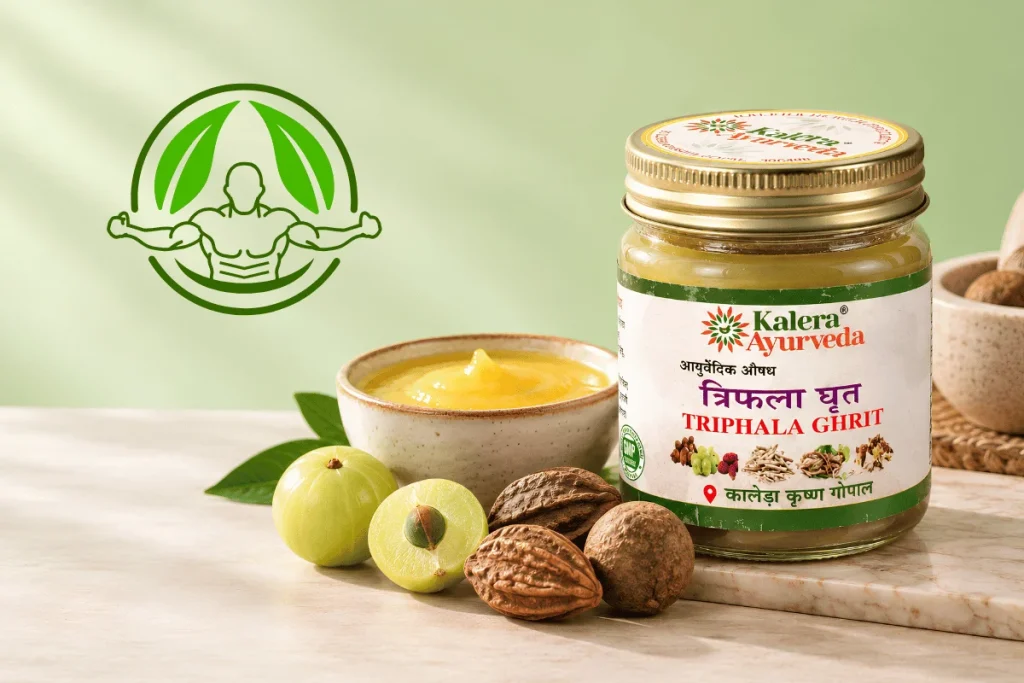
What Are the Main Ingredients in Triphala Ghrit?
The exact ingredients can vary between classical formulations and commercially prepared products. Therefore, always check the product label before purchasing or using one.
Kalera Triphala Ghrit currently lists the following key ingredients:
| Ingredient | Traditional Ayurvedic role |
|---|---|
| Amalaki (Amla) | Traditionally valued for digestion, nourishment and rejuvenative wellness |
| Haritaki (Harad) | Traditionally associated with bowel regularity and digestive support |
| Bibhitaki (Baheda) | One of the three Triphala fruits, traditionally used for digestive and cleansing routines |
| Ghee | Nourishing base traditionally used for medicated Ayurvedic preparations |
| Ashwagandha | Traditionally used for strength, resilience and general wellness |
| Mulethi | Traditionally associated with digestive and soothing support |
| Pippali | Traditionally used to support digestion and metabolism |
Because formulations differ, it is better to discuss the specific product you are using rather than assuming every Triphala Ghrit has the same ingredients.
Triphala Ghrit vs Triphala Churna: What Is the Difference?
Both products are based on Triphala, but their formulation and traditional use can differ.
Triphala Churna is a powdered combination of Amalaki, Haritaki and Bibhitaki. It is commonly used in Ayurvedic digestive and bowel-regularity routines.
Triphala Ghrit, on the other hand, is a ghee-based formulation in which Triphala is combined with ghee and, depending on the product, additional herbs.
So the choice is not simply about which one is “better.” It depends on the formulation, intended use, personal needs and professional guidance.
Read more about Kalera Triphala Churna
Triphala Ghrit for Eye Health: What Should You Know?
Eye health is a major search intent around Triphala Ghrita, but this topic needs careful handling.
Ayurvedic literature has traditionally associated Triphala with eye wellness, and some Triphala-based eye preparations have been studied. However, evidence for one specific Triphala Ghrit product cannot automatically be applied to every eye condition.
In particular, Triphala Ghrit should not be put directly into the eyes unless a qualified Ayurvedic professional has specifically recommended an appropriate sterile preparation and method. A ghee product intended for oral use is not automatically suitable as an ophthalmic product.
If you experience persistent dryness, pain, redness, discharge, sudden blurred vision or vision loss, consult an eye-care professional rather than relying on a home remedy.
How to Take Triphala Ghrit?
The appropriate way to take Triphala Ghrit depends on the particular product and individual needs.
For Kalera Triphala Ghrit, the product page recommends referring to the packaging for usage guidance or consulting an Ayurvedic practitioner for personalized advice. It also notes that it may traditionally be taken with warm water or milk.
This is important because different Triphala Ghrit products can have different ingredient combinations and recommended amounts. Competitor products may provide different dosages, so their instructions should not automatically be applied to Kalera’s formulation.
Can Triphala Ghrit Be Taken With Warm Milk?
Some Ayurvedic ghee preparations are traditionally consumed with warm milk. Kalera’s product information also mentions warm milk or warm water as traditional options.
However, milk is not necessary for everyone. If you have difficulty digesting milk or avoid dairy, follow the product label or ask an Ayurvedic practitioner about a suitable alternative.
Is Triphala Ghrit Suitable for Daily Use?
Daily use should not be decided simply because a product is herbal or traditionally used.
Whether it is appropriate for regular consumption depends on the formulation, quantity, age, digestive tolerance, existing health conditions and other medicines or supplements being taken.
Research on Triphala suggests generally reassuring short-term safety findings in studied preparations, but long-term evidence remains more limited, and different Triphala products cannot be assumed to behave identically.
For this reason, follow the product’s recommended usage rather than increasing the amount on your own.
Possible Side Effects and Precautions
Triphala Ghrit is generally used in small quantities, but “natural” does not automatically mean risk-free.
Possible digestive discomfort can occur if a person does not tolerate the formulation or uses more than recommended. Because the product contains ghee, people who need to monitor dietary fat intake should also consider the overall dietary context.
Extra caution is appropriate if you:
- Are pregnant or breastfeeding
- Take regular prescription medicines
- Have a chronic health condition
- Have significant digestive sensitivity
- Have a known allergy to any ingredient
- Are planning surgery or undergoing medical treatment
- Are considering giving the product to a child
The NCCIH also advises discussing herbal products with healthcare professionals because supplements can have side effects, interactions and differences between the products studied in research and those available commercially.
If you develop an unusual reaction after taking any Ayurvedic product, stop using it and seek appropriate medical advice.
How to Choose a Good Triphala Ghrit
When comparing Triphala Ghrit products, do not look only at price or the number of claimed benefits.
Consider:
Check the ingredient list
Look for clearly listed ingredients rather than vague descriptions. The formulation should be easy to understand.
Check the intended use
A product positioned mainly for digestive wellness may have a different formulation from one designed around eye-focused traditional use.
Follow the product instructions
Dosage should come from the specific product label or a qualified practitioner rather than from another brand’s website.
Store it correctly
Kalera recommends keeping its Triphala Ghrit in a cool, dry place away from direct sunlight.
Choose a transparent manufacturer
Clear ingredient information, usage guidance and product details make it easier to make an informed decision.
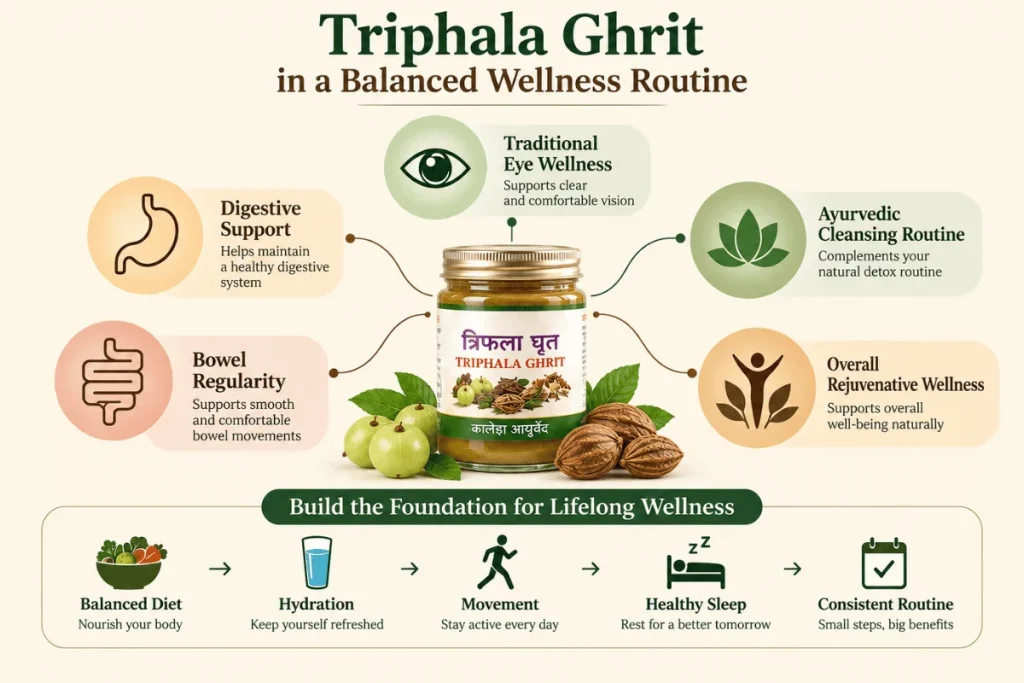
A Simple Way to Include Triphala Ghrit in a Wellness Routine
Triphala Ghrit works best when it is considered alongside everyday habits rather than as a replacement for them.
A practical routine can include:
Balanced meals → adequate hydration → regular movement → healthy sleep → digestive-friendly habits → appropriate Ayurvedic support
The formulation may complement this routine, but the foundation remains lifestyle.
Explore Kalera’s Ghrit Collection
FAQs : About Triphala Ghrit
1. What is Triphala Ghrit mainly used for?
Triphala Ghrit is traditionally used as a ghee-based Ayurvedic formulation for digestive support, regularity, cleansing-oriented routines and overall wellness. Triphala itself has a long history of Ayurvedic use, particularly around digestion and rejuvenation. Eye wellness is another traditional area of interest, although specific eye conditions should be evaluated by an appropriate healthcare professional.
2. Is Triphala Ghrit good for the eyes?
Triphala-based preparations have traditionally been associated with eye wellness, and some Triphala eye-care preparations have been studied. However, this does not mean Triphala Ghrit can treat eye diseases or replace professional eye care. Oral use and ophthalmic use are also different, so an oral ghee product should not be placed directly into the eyes unless specifically prescribed as a suitable eye preparation.
3. Can Triphala Ghrit help with constipation?
Triphala is traditionally used to support bowel regularity, and research has explored its gastrointestinal effects. Triphala Ghrit may therefore be included in an Ayurvedic digestive routine, but persistent or severe constipation should not be managed indefinitely with self-medication. Diet, fluids, physical activity and the underlying cause also matter.
4. Can Triphala Ghrit be taken with milk?
Yes, some Ayurvedic ghee preparations are traditionally taken with warm milk, and Kalera’s product information mentions warm milk or warm water as options. However, the most appropriate method depends on the individual and product instructions. If you do not tolerate milk well, there is no reason to force it into your routine; follow the label or consult an Ayurvedic practitioner.
5. Can Triphala Ghrit be taken every day?
Regular use should depend on the specific formulation and individual requirements rather than a general rule that everyone should take it daily. Available research on Triphala has mainly examined particular preparations and durations, so those findings cannot automatically be applied to every Triphala Ghrit product. Follow the recommended quantity and seek professional advice if you have a medical condition or take medicines.
6. Does Triphala Ghrit have any side effects?
It can cause problems if it does not suit an individual or is consumed inappropriately. Digestive discomfort is possible, and people with health conditions or those taking medicines should be more cautious. Pregnancy, breastfeeding, childhood use and concurrent medical treatment are situations where professional advice is particularly appropriate. As with other herbal products, quality and formulation also matter.
Final Thoughts
The most useful way to understand Triphala Ghrit benefits is through its traditional role as a ghee-based Ayurvedic formulation combining Triphala with nourishing ingredients.
Its strongest traditional associations are digestive wellness, bowel regularity, cleansing-oriented routines, rejuvenative support and eye wellness. At the same time, modern evidence for Triphala is still developing, and research on Triphala itself should not automatically be treated as proof for every Triphala Ghrit formulation.
If you are considering Triphala Ghrit, choose a clearly labelled formulation, follow its recommended usage and view it as part of a balanced wellness routine rather than a replacement for medical care.