
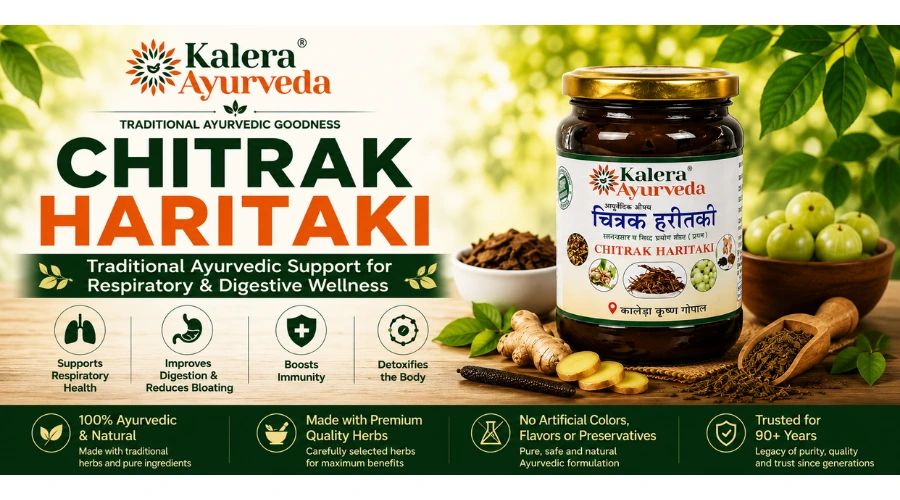
Chitrak Haritaki is a traditional Ayurvedic herbal formulation that is commonly discussed for its role in supporting respiratory and digestive health. It is also known as Chitraka Haritaki Avaleha in traditional references. Current Ayurvedic information sources describe this formulation in connection with concerns such as cough, chronic rhinitis, breathing discomfort, digestive weakness and bloating.
The formulation brings together herbs such as Chitrak and Haritaki along with other traditionally used ingredients. Chitrak, botanically identified as Plumbago zeylanica, and Haritaki, Terminalia chebula, are both recognized Ayurvedic herbs. CCRAS also lists Chitraka Haritaki among formulations that have been evaluated in Ayurvedic clinical research, including research related to chronic rhinosinusitis and stable chronic bronchitis.
For people searching for Chitrak Haritaki benefits, it is useful to understand what the formulation is traditionally used for, which ingredients are associated with it, how it may fit into an Ayurvedic wellness routine, and what precautions should be considered before use.
What Is Chitrak Haritaki?
Chitrak Haritaki is a traditional Ayurvedic formulation associated with both respiratory and digestive health. The name refers to two important herbs used in the formulation: Chitrak (Plumbago zeylanica) and Haritaki (Terminalia chebula). Some modern sources describe Chitrak Haritaki Avaleha as an herbal preparation traditionally made with multiple ingredients rather than as a simple two-herb product.
In Ayurveda, Chitrak is traditionally associated with digestive function, while Haritaki is widely used in Ayurvedic formulations for digestive and elimination-related support. The combination is therefore relevant to people looking for traditional Ayurvedic support for digestion as well as respiratory wellness.
The form of Chitrak Haritaki can vary between products and manufacturers. Traditional references commonly discuss an avaleha, which is a semi-solid herbal preparation, while commercially available products may have different forms and formulations. Therefore, consumers should always check the actual product label for its ingredients, serving instructions and recommended use.
What Are the Main Chitrak Haritaki Benefits?
The potential benefits of Chitrak Haritaki are best understood in the context of traditional Ayurvedic use rather than as guaranteed treatment outcomes. Modern online Ayurvedic references commonly associate the formulation with respiratory wellness, digestive support, cough and cold-related concerns, chronic rhinitis and digestive weakness.
Supports Respiratory Health
One of the major traditional uses associated with Chitrak Haritaki is respiratory support. Current sources discuss its use in connection with concerns such as cough, chronic rhinitis, mucus-related respiratory discomfort and breathing difficulties.
CCRAS records also show completed clinical evaluations involving Chitraka Haritaki in the management of Pinasa (chronic rhinosinusitis) and Kaphaj Kasa (stable chronic bronchitis). These research records show that the formulation has been investigated within an Ayurvedic clinical context, but they should not be interpreted as proof that Chitrak Haritaki can replace prescribed treatment for respiratory disease.
Supports Digestive Function
Another important area associated with Chitrak Haritaki is digestion. Ayurvedic sources traditionally connect Chitrak with digestive stimulation, while Haritaki is commonly used in formulations intended to support digestive and bowel function.
People researching Chitrak Haritaki for digestion often look for information about occasional bloating, digestive weakness and sluggish digestion. These are among the digestive concerns discussed by current Ayurvedic reference pages.
A healthy digestive routine should also include appropriate food choices, hydration, regular movement and adequate sleep. An Ayurvedic formulation should be considered as part of a broader wellness approach rather than as a substitute for medical evaluation when symptoms persist.
May Support Healthy Appetite and Digestive Comfort
Traditional Ayurvedic use of Chitrak is closely associated with digestive function. Because of this, Chitrak Haritaki is often discussed in relation to appetite and digestive comfort.
If someone regularly experiences loss of appetite, persistent abdominal discomfort, unexplained weight changes or ongoing digestive symptoms, however, it is important to identify the underlying cause rather than relying only on a herbal product.
Supports Traditional Ayurvedic Respiratory Wellness
Chitrak Haritaki is particularly relevant to people searching for an Ayurvedic herbal formulation for respiratory health. Traditional references and current Ayurvedic resources associate it with respiratory concerns involving cough, mucus and chronic rhinitis.
The exact suitability of a formulation depends on the person’s condition, age, existing medicines and individual health requirements. This is especially important for people with diagnosed respiratory conditions such as asthma or chronic bronchitis.
What Are the Key Ingredients in Chitrak Haritaki?
The exact ingredient list can differ according to the specific formulation and manufacturer, so the product label should always be treated as the final reference for a purchased product.
Two important herbs associated with Chitrak Haritaki are Chitrak and Haritaki. Chitrak is Plumbago zeylanica, while Haritaki is Terminalia chebula. Government and Ayurvedic research resources recognize both plants as traditional medicinal plants used in Ayurvedic preparations.
The Kalera Ayurveda product information also identifies other traditionally used herbs associated with its Chitrak Haritaki formulation, including Triphala, Pippali, Vidanga and Ginger.
Chitrak
Chitrak, or Plumbago zeylanica, is traditionally associated with digestive function in Ayurveda. It is also a recognized ingredient in several Ayurvedic formulations, including Chitraka Haritaki.
Haritaki
Haritaki, botanically known as Terminalia chebula, is one of the widely used Ayurvedic herbs and is traditionally associated with digestive and elimination support. It is also one of the three fruits used in Triphala.
Triphala
Triphala is a traditional combination of Amalaki, Bibhitaki and Haritaki. It is widely used in Ayurveda as a multi-herb formulation associated with digestive and general wellness support.
Pippali
Pippali, or long pepper, is traditionally used in Ayurveda in formulations related to digestion and respiratory wellness. It is commonly found in Ayurvedic preparations that focus on these areas.
Vidanga
Vidanga is another traditional Ayurvedic herb used in formulations associated with digestive health. It has a long history of use in Ayurvedic herbal preparations.
Ginger
Ginger is widely used as a culinary and traditional herbal ingredient and is commonly associated with digestive comfort. Its inclusion in Ayurvedic formulations adds another traditionally used digestive herb to the combination.
What Is Chitrak Haritaki Used For?
The most common search intent around Chitrak Haritaki uses relates to respiratory and digestive wellness. Current Ayurvedic reference sources mention traditional use in concerns including cough, chronic rhinitis, breathing difficulty, digestive weakness, bloating and intestinal concerns.
Traditional use may therefore include support for:
- Respiratory wellness
- Digestive function
- Occasional bloating
- Digestive weakness
- Cough-related discomfort
- Chronic rhinitis-related wellness
- General Ayurvedic digestive support
These traditional uses should not be presented as guaranteed treatment claims. A persistent cough, breathing difficulty, recurrent wheezing, fever, chest pain, blood in mucus or other serious symptoms require appropriate medical evaluation.
How to Take Chitrak Haritaki?
The correct way to take Chitrak Haritaki depends on the specific formulation, product form and manufacturer’s instructions. Different Chitrak Haritaki products can have different concentrations, ingredient combinations and recommended servings.
For this reason, consumers should follow the dosage and directions printed on the product packaging rather than copying a dosage from another brand or an unrelated online source.
Some Ayurvedic reference sources discuss Chitrak Haritaki in semi-solid avaleha form and provide physician-directed dosing guidance, but those recommendations should not automatically be applied to every commercial product.
If you are taking prescription medicines, have an existing health condition, are pregnant or breastfeeding, or are considering the product for a child, consult a qualified healthcare professional or Ayurvedic practitioner before use.
Who Should Be Careful With Chitrak Haritaki?
Ayurvedic products are not automatically suitable for everyone simply because they contain herbs. Individual suitability can depend on age, health condition, medicines, diet and other factors.
People who are pregnant or breastfeeding should seek professional advice before using Chitrak Haritaki. People with chronic respiratory conditions, gastrointestinal conditions, liver or kidney problems, or those taking regular medicines should also discuss herbal products with an appropriate healthcare professional.
Chitrak is traditionally considered a warming herb, so individual tolerance and Ayurvedic suitability are important considerations. Rather than choosing a product only because of online claims about Chitrak Haritaki benefits, it is better to consider the complete formulation and personal health requirements.
Chitrak Haritaki and Modern Ayurvedic Research
Interest in Chitrak Haritaki is not limited to traditional references. CCRAS, India’s Central Council for Research in Ayurvedic Sciences, lists clinical evaluation projects involving Chitraka Haritaki. One completed project evaluated Chitraka Haritaki with Shadbindu Taila Nasya in chronic rhinosinusitis, while another evaluated Chitraka Haritaki with Lavangadi Vati in stable chronic bronchitis.
The existence of these studies is useful when understanding the research interest around the formulation. However, research findings should be interpreted carefully, especially when deciding whether an Ayurvedic formulation is appropriate for an individual’s condition.
Ayurvedic products should therefore be used responsibly, particularly when someone already has a diagnosed medical condition or is taking other medicines.
Why Choose Kalera Ayurveda Chitrak Haritaki?
Kalera Ayurveda offers Chitrak Haritaki as part of its Ayurvedic product range. According to the product information provided by the brand, the formulation is positioned for respiratory wellness, digestive support and general Ayurvedic health support.
The product is available in a 250 gm pack, and the product page provides its current price and ordering information. Consumers should check the live product page for the latest availability, pricing, packaging and usage instructions.
Kalera Ayurveda also states that its Ayurvedic products are prepared using selected herbal ingredients and follows quality-focused product practices. When buying any Ayurvedic product, customers should review the ingredient list, packaging, manufacturing information, expiry information and directions for use before consumption.
How to Store Chitrak Haritaki?
Proper storage helps maintain the quality of an herbal product. Chitrak Haritaki should be stored according to the instructions provided on its packaging.
In general, Ayurvedic herbal products should be protected from excessive heat, moisture and direct sunlight, and the container should remain properly closed when not in use. Always check the product label for the manufacturer’s specific storage instructions and shelf-life information.
For Kalera Ayurveda Chitrak Haritaki, follow the storage and expiry information printed on the current packaging rather than relying on an old product description.
Chitrak Haritaki: A Traditional Ayurvedic Approach to Digestive and Respiratory Wellness
Chitrak Haritaki has a long association with Ayurvedic formulations focused on respiratory and digestive wellness. Its key herbs, including Chitrak and Haritaki, are traditionally valued for their different roles in Ayurvedic practice, while supporting ingredients such as Pippali, Triphala, Vidanga and Ginger contribute to the formulation’s broader herbal profile.
For people searching for Chitrak Haritaki benefits, uses, ingredients and dosage, the most important point is to understand that traditional use and modern medical treatment are not the same thing. A well-informed approach means checking the actual product formulation, following the manufacturer’s directions, considering individual health needs and seeking professional advice when necessary.
Kalera Ayurveda’s Chitrak Haritaki can be considered as part of a traditional Ayurvedic wellness routine when it is appropriate for the individual. For persistent or serious symptoms, professional medical guidance should always come first.
Frequently Asked Questions
1. Is Chitrak Haritaki the same as Chitraka Haritaki Avaleha?
Chitrak Haritaki and Chitraka Haritaki Avaleha are commonly used names for the traditional Ayurvedic formulation. However, commercial products can differ in form and ingredient composition, so the product label should be checked before use.
2. What are the main Chitrak Haritaki benefits?
Chitrak Haritaki is traditionally associated with respiratory and digestive support. Current Ayurvedic sources discuss its use in relation to cough, chronic rhinitis, breathing-related discomfort, digestive weakness and bloating.
3. Is Chitrak Haritaki good for digestion?
Chitrak Haritaki is traditionally used to support digestive function. Chitrak is particularly associated with digestive activity in Ayurveda, while Haritaki is traditionally used for digestive and elimination support.
4. Can Chitrak Haritaki be used for cough and cold?
Chitrak Haritaki is traditionally associated with respiratory wellness and is discussed in Ayurvedic sources in relation to cough and certain chronic respiratory concerns. Persistent cough, fever, breathing difficulty or worsening symptoms should be evaluated by a healthcare professional.
5. What are the main Chitrak Haritaki ingredients?
Chitrak and Haritaki are the two herbs highlighted in the name of the formulation. Depending on the specific preparation, other herbs may also be included. Kalera Ayurveda’s product information lists ingredients such as Triphala, Pippali, Vidanga and Ginger in its formulation.
6. What is the correct Chitrak Haritaki dosage?
There is no single dosage that should be applied to every Chitrak Haritaki product because formulations and forms can differ. Follow the dosage printed on the specific product packaging or consult a qualified Ayurvedic practitioner.
7. Can everyone take Chitrak Haritaki?
No herbal product should automatically be considered suitable for everyone. Pregnant or breastfeeding individuals, children, people with chronic health conditions and those taking medicines should seek professional advice before using Chitrak Haritaki.
8. Does Chitrak Haritaki replace medical treatment?
No. Chitrak Haritaki should not be presented as a replacement for prescribed medical treatment. People with diagnosed asthma, chronic bronchitis, serious digestive conditions or other ongoing health problems should follow appropriate professional medical guidance.
9. How should Chitrak Haritaki be stored?
Store the product according to the instructions on its packaging and protect it from unsuitable heat, moisture and direct sunlight. Always follow the manufacturer’s storage and expiry instructions.
10. Where can I buy Chitrak Haritaki?
Kalera Ayurveda offers Chitrak Haritaki through its official website. Check the current product page for the latest price, pack size, availability, shipping information and usage instructions.